
Complimentary Shipping & Fuss-Free Returns

Behind the Fine: What Makes Our Jewelry Fine?

  • Short Description: Our jewelry isn't meant to be worn for a season and discarded, but sources of happiness meant to bring you a lifetime of enjoyment. Here’s everything we do that puts the “fine” in fine jewelry.
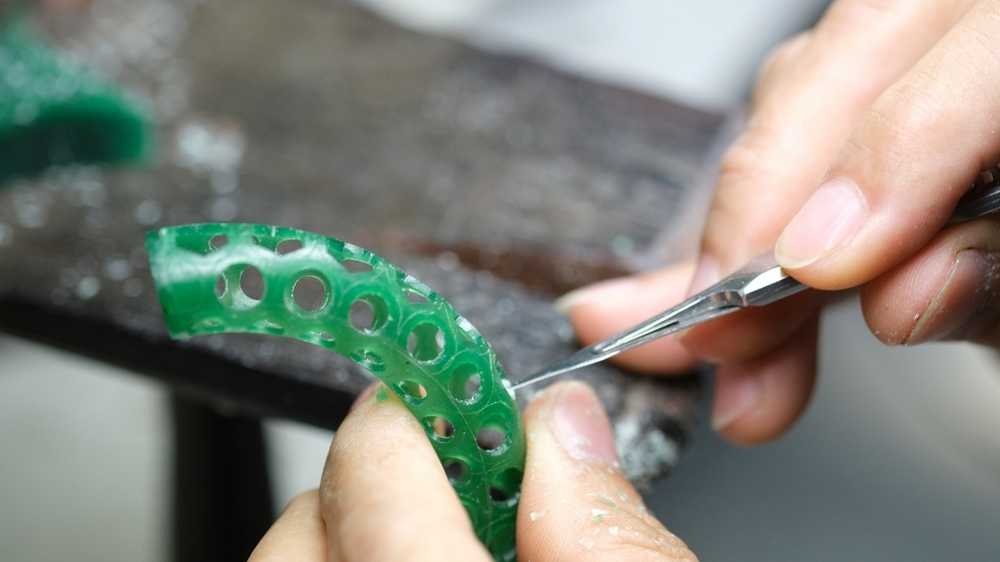
We take great care with every aspect of our fine jewelry, from designing pieces you’ll love, to sourcing and cutting gemstones, to using handcrafted techniques in the production process. It is the use of only the best materials on offer that makes our jewelry “fine” jewelry. These aren’t pieces meant to be worn for a season and discarded, but sources of happiness meant to bring you a lifetime of enjoyment. Here’s everything we do that puts the “fine” in fine jewelry.


Behind The Fine


Part of making fine jewelry is working with only the best in their field. Our manufacturers are spread out all over the world, but what they all have in common is a commitment to the traditional process of making jewelry. This allows us to look to the future by combining the best of the past and the present, using time-honored techniques to fashion timeless designs. The result is a piece of jewelry that can be worn every day, for all of your days, and will always look fresh. All of our items are the unique product of an individual craftsperson. This commitment to quality takes time, but the result is worth waiting for!

Most of our collections are made from 18k gold, offering durability without sacrificing luxury. Our 18k gold alloy gives our pieces their beautiful, subtle hue, whether in yellow, white or rose gold. We also accent our pieces with sterling silver and black rhodium. “Sterling” describes silver that is at least 92.7% pure, while black rhodium is a rare type of platinum that we use to give some of our pieces a dramatic depth and a timeless, vintage look.
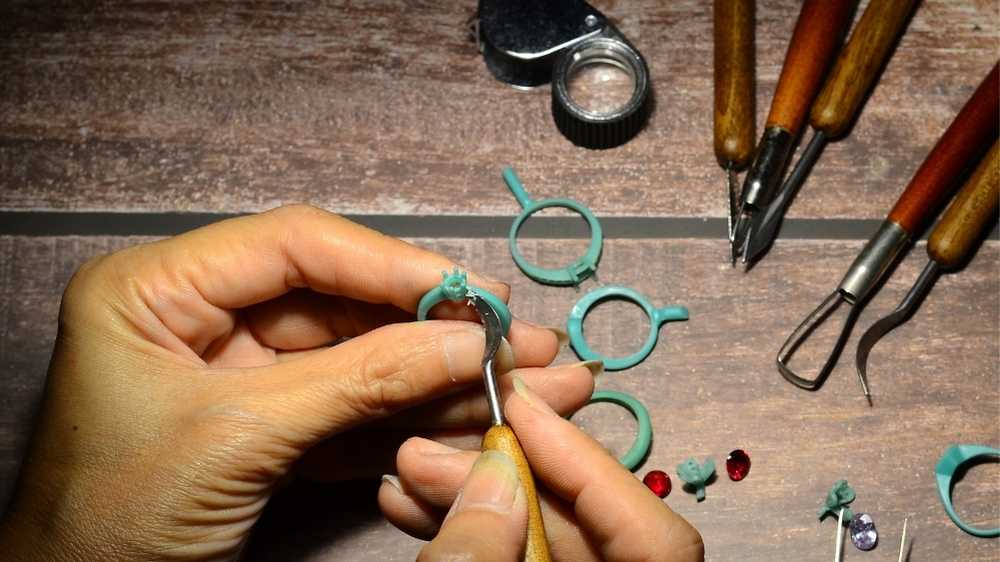
Hand setting stones

Active in Every Part of the Process

Our gemstones are cut and polished in our stone lapidary in Jaipur, India, and we take an active part in the entire process, from sourcing to production. We are not only committed to giving you the highest quality fine jewelry. We also have a responsibility to leave the world in better shape than we found it [link to social responsibility].

We set out to spread joy through beauty, and we know that objects meant to bring happiness cannot have their origin in practices that cause harm. If that were the case, have we really made the world more beautiful?

Beauty can’t come out of ugly practices, so we root our work in an ethical sensibility. That’s why we have a zero-tolerance policy toward conflict diamonds. All of our business practices are based on fair and transparent trading. We hold to these principles when sourcing gemstones and metals, when working with suppliers, manufacturers, and other partners, and when serving our customers.

Art is all about capturing a moment and transforming it, allowing us to see our lives and ourselves in different ways. We started Syna with a vision for what jewelry could do as an artistic medium, and how it could capture moments of joy and crystallize them into objects of beauty. We’re so happy to see that vision bear fruit for us and for everyone in the Syna family.
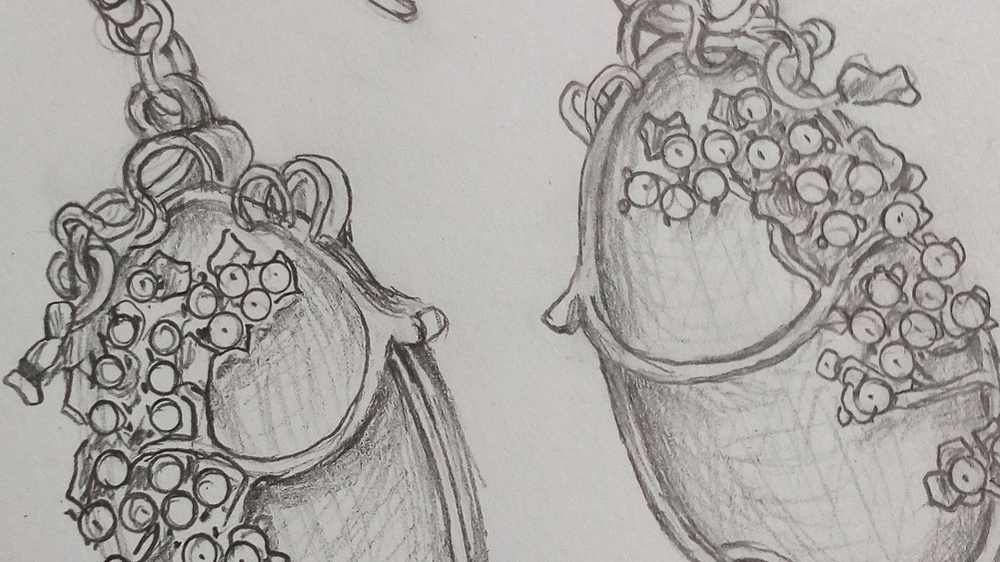
syna vineyard earring sketch details

CARAT VS KARAT

  • Short Description: In the U.S. karat with a "K" is a measure of purity of a metal (gold, platinum,silver) whereas carat with a "C" refers to the weight of a diamond or gemstone. Here's a quick read to get you a little more jewelry savvy.

CARAT WITH A C

This term refers to the weight, not the size of a stone. Since carat weight varies by material, some types of gemstones are heavier than others. For example, if all other measurements are the same, a one-carat diamond will look slightly smaller than a one-carat emerald but slightly larger than a one-carat sapphire. Keep in mind that when you are buying a stone or piece of jewelry, the stone weights are often approximate. 

KARAT WITH A K

In the U.S. karat with a "K" is a measure of the purity of a metal (gold, platinum, silver) whereas a carat with a "C" refers to the weight of a diamond or gemstone. Most jewelry pieces are made from a mix of precious metals (primary metals such as platinum, gold, and silver) and other less expensive metals. This mix, in any proportion, is referred to as an alloy. Most precious metals are alloyed because in their natural state they are soft, and they wear better with other, usually stronger, metals mixed with them. Adding other metals may also have an effect on an item's price since a lower percentage of precious metal in a piece of jewelry usually means a lower price. Most jewelry for sale today is made from alloyed metal. However, some designers enjoy working in the purer version of metals, so it's possible to buy a higher-karat piece of jewelry that contains a very small proportion of another metal.

 In gold, 24 karat equals 100% (or in finished jewelry, 99.99 % gold)

  • 18 karat gold is 75% gold and 25% other metals
  • 14 karat gold is 58.5% gold and 41.5% other metals
  • 10 karat gold is 41.7% gold and 58.3 % other metals

Purity in gold, and in all metals, may also be reported differently in different countries. An 18-karat gold item may be marked as 750 instead of 18k. 

In silver, purity is measured in parts per thousand (ppt). The standard for sterling silver is 925 ppt, which means that, for every 1000 parts, 75 of them (or 7.5%) are alloy metals. You usually see either "sterling" or "925" marked on a piece that has this purity.


Crafting Future Heirlooms

  • Short Description: The union of art and craft—imagination and application—is something that has always been important to us. Our jewelry has to look as fresh in ten or fifty years as it does today.
  • Long Description: The union of art and craft—imagination and application—is something that has always been important to us. We never want to follow trends, as trends are fleeting and will ultimately make your art quickly seem dated or anonymous. Our jewelry has to look as fresh in ten or fifty years as it does today.

The union of art and craft—imagination and application—is something that has always been important to us. We never want to follow trends, as trends are fleeting and will ultimately make your art quickly seem dated or anonymous. Our jewelry has to look as fresh in ten or fifty years as it does today. What might look great now could look cheap or cliché in the very near future. So rather than just make jewelry, we aim to craft works of art that will stand the test of time, and that will remain a part of your life as trends change, styles evolve, and your life experience leads you to see the world in new ways.

In this way, we’re creating heirlooms for you and your family. But for a piece of jewelry to become an heirloom, you first have to love how it looks. It has to resonate with you in some way. We believe that as long as our designs come from the heart, they will find a place in yours.

To do this, we approach jewelry design as an art and a craft. It’s one thing to have a great idea, but you also need the craft to execute it. Art is the transformation of experience into an object, whether a painting, a poem, a film—or a piece of jewelry. It comes from being present in every moment, opening yourself to receive inspiration, and finding meaning in even the smallest things. We are always looking for little sources of joy in life, and we transform that joy into something we can share with you through our jewelry.

Craft is the work that goes into that transformation: the skills, the tools, the application of knowledge, and training. Our jewelers are always learning. No matter how good you are, there’s always something more to learn! When you’re first starting out, the amount of things you need to learn in any field is overwhelming. When you get a little experience under your belt, you might start to feel like you know everything. But true masters of a craft know that despite all of their knowledge and experience, they know only a fraction of what’s out there, and they never stop studying and learning from every situation. That’s what it takes to craft a jewel that looks great now, can be worn for any occasion and will be cherished by future generations.

Our jewelry is crafted for everyday wear, to be a part of your life. But it’s also crafted to last a lifetime—many lifetimes, we hope, as that special piece is handed down from generation to generation, with all of your family’s memories intact.


Is My Diamond Fake? Eleven Tests You Can Try at Home

  • Short Description: Has this ever happened to you? You’ve come into a piece of diamond jewelry, but you’re not exactly sure if it is indeed a diamond. Maybe you inherited a family heirloom, or you purchased a diamond for a suspiciously low price, or someone gave you a gift. You start to wonder what it’s really worth. Is this the real thing? Is there any way to truly know?
  • Long Description: Has this ever happened to you? You’ve come into a piece of diamond jewelry, but you’re not exactly sure if it is indeed a diamond. Maybe you inherited a family heirloom, or you purchased a diamond for a suspiciously low price, or someone gave you a gift. You start to wonder what it’s really worth. Is this the real thing? Is there any way to truly know?

Has this ever happened to you? You’ve come into a piece of diamond jewelry, but you’re not exactly sure if it is indeed a diamond. Maybe you inherited a family heirloom or purchased a diamond for a suspiciously low price, or someone gave you a gift. You start to wonder what it’s really worth. Is this the real thing? Is there any way to truly know?

First of all, what do we mean by “real”? The word “diamond” describes a mineral crystal composed of at least 99.95% carbon. A real diamond can be grown in the upper mantle, the layer of the Earth below the crust, over the course of millions of years, or in a laboratory over a few weeks, either by a process called High Pressure, High Temperature (HPHT), which mimics the hot, pressurized environment in which natural diamonds grow, or Chemical Vapor Deposition (CVD), a process by which carbon atoms are added layer by layer to a diamond seed inside of a vapor-filled chamber.

The following methods will tell you whether or not your stone is a diamond, but many of them won’t tell you if that diamond came out of the ground or out of a laboratory. That’s a much more difficult distinction to make, requiring an expert gemologist to use technology that is not commercially available. But if you want to determine whether your diamond is a diamond and not glass or some diamond imitation like cubic zirconia or moissanite, here are a few simple tests you can try at home.

The Electronic Test

The simplest and most accurate way to determine the authenticity of your diamond is to purchase an electronic diamond tester. You can buy these on Amazon, and they are relatively inexpensive. These devices heat the diamond and measure the rate of thermal conductivity to determine whether or not the stone is a diamond.

Newspaper “Read-Through” Test

Place your diamond on a newspaper. If you can read the writing through the diamond then it is likely that your “diamond” is actually quartz or glass. This is because diamonds are not actually transparent: they have a high refractive index and dispersion of light, which means they bend and reflect incoming light, making it difficult to see through them. These properties make diamonds appear brighter and more colorful than plain glass.

The Fog Test

A diamond is very good at dispersing heat. The “Fog Test” involves holding the diamond up to your mouth and exhaling, like you would when cleaning your glasses or a mirror. A real diamond will evaporate the fog immediately. If the fog stays on the diamond for more than 3-4 seconds, you may be holding a fake diamond.

The Weight Test

Use a carat or gram scale to weigh your diamond. Fake diamonds will normally be 50-60% heavier than authentic diamonds of the same size.

The Rainbow Test

Look closely at your diamond’s sparkle. Do you see beautiful shifting shades of gray, or do you see many rainbow reflections? If you see many rainbow reflections, you either have a fake or a low-quality diamond.

The UV Test

This is a good test for people who have access to ultraviolet light or black light. Place the diamond under the UV or blacklight in a dark room. If the diamond is real, it should have a blue fluorescent glow. If you see a green, yellow, or gray fluorescence, the diamond could be fake. If the diamond does not exhibit any fluorescence (it does not glow any color under UV light), that does not mean the diamond is fake. You may simply have a higher-quality diamond.

The Flaw Test

Diamonds tend to have tiny flaws in them such as small cracks, traces of carbon or other elements, or pinpoints. These flaws are called inclusions, and too many of them can affect the clarity of the diamond. The fewer inclusions in the diamond, the higher it scores on the clarity chart. You can use a magnifying glass to check for these tiny imperfections. If you can’t see any, you either have a lab-grown diamond, a fake diamond, or an extremely rare flawless diamond.

The Metal Test

If your diamond is set in a ring, check the shank for a hallmark. The shank is the part of the ring that encircles the finger, while the hallmark is a stamp that may contain information about the manufacturer, the type of metal used, and the composition (i.e. “925” for sterling silver or “999” for 24 karat gold), the place of manufacture, or the type of stone used. If the hallmark reads “CZ,” your stone is cubic zirconia and not a diamond. 

The Water Test

Diamonds are denser than water. If you have a loose diamond, you can drop it into a glass of water. If it sinks, then it is a real diamond. If it floats above or just below the surface of the water, your diamond is likely a fake.

The Loupe Test

Another inexpensive jeweler’s tool that you can purchase and use is a loupe, those little lenses jewelers hold up to their eyes to inspect jewels. A loupe will let you clearly see a diamond’s inclusions. Glass imitations, lab-grown diamonds, or gemstones that imitate diamonds like cubic zirconia do not generally have inclusions.

The Jeweler Test

While none of the above tests are 100% definitive on their own, performing a few of them can allow you to say with some certainty that your stone is or is not a diamond. The only place to get a definitive answer is from a professional at your local jeweler. Gemologists have the training, experience, and equipment to tell you exactly what your stone is made of. Not only will they be able to tell you if your stone is a diamond or an imitation stone; they will be able to tell you if your real diamond came from a mine or a laboratory.


Jewelry Care Made Easy

  • Short Description: Our fine jewelry is designed to stand the test of time, and with a little care each piece can be treasured by you and your family for generations to come. While it may seem like a chore, it actually doesn’t take a lot of work to keep your jewels sparkling. Read on for tips for caring for gold, enamel, and all sorts of gemstones.

Our fine jewelry is designed to stand the test of time, and with a little care, each piece can be treasured by you and your family for generations to come. While it may seem like a chore, it actually doesn’t take a lot of work to keep your jewels sparkling. Read on for tips for caring for gold, enamel, and all sorts of gemstones.

General Tips

  • Most types of jewelry will become dull over time through repeated exposure to sweat, oils, lotions, and perfumes. Make sure to apply any perfume or hair spray before putting on your jewelry. Likewise, remove your jewelry before bathing, swimming, or exercising.
  • It is possible to clean your jewelry too much. For pieces you don’t wear every day, an annual cleaning should suffice.
  • All of our pieces come with a jewelry pouch. To ensure the longevity of your jewels, store them in the provided pouch.
  • Have your jewelry professionally cleaned by a local jeweler about once a year

Gold

Pure gold does not tarnish, and gold jewelry is naturally resistant to tarnishing. Gold can, however, lose its luster over time, so make sure to wipe down your gold with a polishing cloth 3-4 times per year. You don’t want to over-polish your gold.

There are many products and devices on the market for cleaning gold, but all you need is a few drops of dish soap and a bowl of warm water.

  1. Add about a tablespoon of dish soap to a bowl of warm water
  2. Soak your gold jewelry for 10-15 minutes
  3. Use a soft-bristle baby toothbrush to remove dirt from the gold (but not the gemstone), if needed
  4. Rinse off any soap residue
  5. Pat dry with paper towels

And that’s all there is to it! If the gold jewelry contains gemstones, you’ll have to be a bit more careful. It’s fine to use soap to clean diamonds, rubies, and sapphires, but emeralds and opaque gemstones are too porous to submerge in water. In that case, it is best to use a damp cloth to wipe down the jewelry rather than soaking it in water. Finally, do not use a toothbrush, even a soft one, on gemstones.

Crystalline Gemstones

Gemstones such as quartz, amethyst, topaz, diamonds, and rubies can become dull over time due to the accumulation of oils, lotion, perfume, and the like.

Emeralds are one exception. Due to their porosity, they should not be submerged in water for any length of time.

To clean gold jewelry with crystalline gemstones, follow the steps in the above section.

Opaque Gemstones

Like emeralds, opaque gemstones are porous and should not be submerged in water. This category includes softer gemstones such as opal, turquoise, and lapis lazuli.

The best way to clean these types of gemstones is to wipe them with a damp cloth. Do not soak them or clean them with chemicals such as bleach or ammonia.

Pearls

While most gemstones can be damaged by contact with body oils, the same does not hold true for pearls. The body’s natural oils help to preserve pearls. You do, however, want to keep them away from perfumes and lotions, and remove them before exercise just like other gemstones, as perspiration can damage them.

Pearls also thrive in damp environments, so store your pearls in a humid place. A dry environment can cause pearls to crack.

Gently wipe down your pearls with a soft cloth after wearing them. Never use a toothbrush, even a soft one. Pearls are themselves very soft (2.5 on the Mohs hardness scale) and are easily scratched. For more thorough cleaning, follow these steps:

  • Add ½ tablespoon of dish soap to 2 cups of warm water
  • Dip a soft cloth in the water and gently wipe down the pearls
  • Dry thoroughly with a separate cloth.

It is worth it to buy a soft chamois or bamboo cloth to avoid scratching your pearls.

Black Rhodium

Black rhodium is a rare type of platinum often plated over silver or gold to create a darker hue. Any type of metal plating fades over time, especially in areas that come in contact with the skin, so remove your jewelry before going to bed. Avoid over-polishing plated metals.

Enamel

Enamel is made by fusing powdered glass with metal at high temperatures, creating a beautiful yet fragile work of art unlike anything else. Because of its delicacy, clean it only with mild soap and water using a soft cloth. Let it air dry, and store it in the provided Syna jewelry pouch. Avoid extreme temperatures, cosmetics, lotions, acetone, or jewelry cleaner.

For most jewelry, infrequent cleanings using soap and water is sufficient to keep it looking like it did the day you bought it. A little care at home, along with annual professional cleaning, is all it takes. For more jewelry care tips, see our care guide here.

Turquoise: The Desert Sky in December

  • Short Description: The beautiful blue-green color of Turquoise, the birthstone of December, will transport you somewhere warm in the depths of winter: to tropical seas with its blue-green color and oceanic patterns, or to the clear desert sky above the American Southwest or Persia in its sky-blue variety.
  • Long Description: The beautiful blue-green color of Turquoise, the birthstone of December, will transport you somewhere warm in the depths of winter: to tropical seas with its blue-green color and oceanic patterns, or to the clear desert sky above the American Southwest or Persia in its sky-blue variety.

The beautiful blue-green color of Turquoise, the birthstone of December, will transport you somewhere warm in the depths of winter: to tropical seas with its blue-green color and oceanic patterns, or to the clear desert sky above the American Southwest or Persia in its sky-blue variety. The name by which we know it today comes from the French, who called it pierre turquoise, as the first turquoise to reach Europe passed through Turkey, but its influence and historical and cultural significance range far wider than that.

History

While the Persians (located in modern-day Iran) have been mining turquoise for two thousand years, the gemstone has been in use for even longer. Turquoise has appeared in jewelry for longer than almost any other gemstone. The subtle bands of light blue that so beautifully complement the dark blue lapis lazuli and contrast the gold in Tutankhamun’s mask, dating back to the 1300s BCE, are turquoise. It was one of the first stones mined by humans, as it can be collected from the ground without a lot of manpower, sophisticated tools, or complex mining techniques. Even today, it is often mined by hand, just as it was thousands of years ago.

During the Mogul era, master artisans from all over Asia flocked to India. Persian artists brought their love of turquoise, integrating that unique shade of blue-green into the classic Mughal color palette of gold, jade, ruby, and sapphire. It’s one of the inspirations for some of our own pieces, such as the Seven Chakra Charm Bracelet and Mogul Kamala Turquoise Earrings.

In the United States, however, turquoise is most closely linked to Southwestern Native American cultures, such as the Pueblo, Zuni, Hopi, and Navajo. Turquoise is connected with elemental forces in many Southwestern creation myths. The Navajo say the first man and woman used a stone disk with a turquoise edge to create the sun, while for the Zuni, blue turquoise represents masculine energy and the sky and green turquoise represents feminine energy and the earth.

Color

If you remember your high school chemistry class, you might remember the time the teacher added copper to a flame and turned it green. Copper has the same effect on turquoise. Its presence in trace amounts gives the stone its distinctive color, ranging from blue-green to pale green.

In addition to copper, turquoise also contains iron. Both copper and iron are prone to oxidation: it’s why metal objects form rust and the copper Statue of Liberty has turned green. Over the course of decades, your turquoise may slowly change color due to oxidation, with complex patterns of green, brown, and yellow forming on the surface. This is a natural phenomenon that many turquoise lovers find beautiful.

Cleaning and Care

Turquoise was born in the desert and prefers that kind of arid climate, but it can thrive anywhere with a little care. Due to its porous surface and the presence of copper and iron, exposure to oils (including skin oils), humidity, and moisture can accelerate this color change or damage the stone. When you’re not wearing it (which might not be often, because you’ll never want to take it off!), store turquoise jewelry in a dry and dark place, preferably in a sealable plastic bag inside of a box. Take care to wipe down your turquoise with warm soapy water after use.

What's your Bejeweled Personality?

  • Short Description: Your personality is a significant factor in your choice of jewelry. When it comes to aesthetics, we all have marked different styles. Alyce Parsons through her Universal Style System has categorized styles and provided guidane to help you determine which style best represents who you are and what you want.

Your personality is a significant factor in your choice of jewelry. When it comes to aesthetics, we all have marked different styles.

Several respected image consultants have developed systems to categorize style personalities. One of the original and best is the Universal Style System, introduced by Alyce Parsons and Diane Parente in the early 1990s. It categorizes styles into seven types: Sporty, Traditional, Elegant, Feminine, Alluring, Creative and Dramatic. It provides guidance to help you determine which style best represents who you are and what you want. 

As you read through these descriptions of personality styles, you may find that more than one of the categories appeals to you. For many people, one category (for example, Classic or Elegant) defines their business look; a second category (for example, Sporty or Feminine) captures how they dress for leisure-time activities, and yet another category (for example, Creative and Alluring), defines their characteristic style for evenings or special occasions. Alternatively, you may find that one of the following personality styles suits you to a tee in all your activities. Either way, remember that the style of your jewelry, like the style of your apparel, speaks volumes about you. 


SPORTY

The Sporty personality likes jewelry that doesn't interfere with an active lifestyle, and, therefore, the pieces tend to be small and unobtrusive. She likes to incorporate natural materials (such a wood or pearls) and often favors amusing and witty pieces incorporating such designs as animals, music, or sporting motifs. The Sporty personality prefers studs earrings or small hoops. Necklaces are worn inside the neckline. In necklaces, she chooses basic pearls, gold link chokers, and novelty pendants on short, fine chains. Brooches are worn n shirt collars or lapels. 

traditional

The Traditional personality takes a business-like approach to her jewelry. She wants pieces that work in a professional setting. For her, earrings are small or medium-sized designs that cover her earlobes and do not dangle or otherwise distract with movement. Button shapes and small hoops not large than the size of a quarter are both appropriate. Since she may favor jewel necklines, matinee-length pearls and 24-inch chain or bead necklaces that can overlie those necklines are often part of her working wardrobe. Brooches are conservatively styled. often in bar or circle shapes, and are worn on lapels or shirt collars. Suites of jewelry - that is, matched sets- are favored by the Traditional personality. 

ELEGANT

The Elegant personality dresses impeccably and with refined restraint, focusing on superior design and workmanship. Her jewelry choices, like her clothing, are understated with clean lines. She wears designer earrings, often in rounded button shapes, but always of timeless design. She wears necklaces of all lengths, sometimes in multiples (a la Coco Chanel), and she may combine chains with beads and pearls. Brooches are beautifully crafted statement pieces. The Elegant personality likes to wear designer jewelry for its association with quality and status.

FEMININE

The Feminine personality is romantic, favoring flowers, ribbons, and bows. She typically likes vintage pieces featuring lacey openwork or other fine details. The lines in her jewelry are soft and rounded. Bracelets are delicate bangles or link styles (such as charm bracelets), worn loosely on the wrist. Necklaces are delicate and are of short or medium length. Brooches contain fine detail and will often reflect romantic themes.

ALLURING 

The Alluring personality likes to project a sexy or glamourous image. She takes a "look at me" approach to dressing. Her jewelry often includes movement and undulating designs. She often wears jewelry to bring attention to the part of her body that she wants to be noticed. Earrings are large hoops, drop earrings, chandeliers, or other long styles, and usually have movement. She favors lariat necklaces and long necklaces knotted to lie close to her body and bring attention to her cleavage. Bracelets dangle; brooches generally are used only to highlight specific portions of her apparel, such as the dip of a low neckline. 

CREATIVE

The Creative personality has an artistic nature and likes to bring an element of originality into her apparel and accessories. Imaginative and unconventional, she thinks rules are meant to be broken. She piles on eclectic accessories or puts together unconventional mixes of classic items. Ethnic or Gothic are but two sub-categories of jewelry she may favor. Nothing demure in accessories for this woman! She'll wear huge earrings, brooches, and complex necklaces, sometimes all at once. She'll also use jewelry in creative ways - for example, wearing two different earrings or multiple earrings on one ear, or placing brooches in creative spots such as on a sleeve, at the back shoulder of her dress, or pinned to a boot.

DRAMATIC

The Dramatic personality conveys a confident, authoritative style by the use of strong, even severe accessories. More than any other personality type, the Dramatic woman's style is typified by strong, clean lines, and she characteristically wears one bold statement piece of jewelry. Her earrings are oversized, geometric shapes. Bracelets are wide sculpted cuffs or highly structured rigid links. Necklaces are oversized and sculpted and wor close to the neck. Styles of brooches she favors may include Art Deco and abstract, asymmetrical designs. 

Why Buy 18K Gold?

  • Short Description: If 24k gold is so valuable, why don’t we use it in our jewelry? 24k gold is so soft that a piece of pure gold can be altered into different shapes by hand. For us, 18k gold strikes the perfect balance between the high value of 24k gold and the durability of 14k gold, with a color that looks great with just about any gemstone.
  • Long Description: So if 24k gold is so valuable, why don’t we use it in our jewelry? For one thing, pure gold would be prohibitively expensive. The other reason goes back to gold’s malleability. It is a soft metal—so soft that a piece of pure gold can be worked into different shapes by hand. This is why we have the cliché of gold medal winners biting into their medals: pure gold is soft enough that if you bite it, you’ll leave tooth marks.

Previously, we’ve talked about the difference between “carat” (a unit of weight for gemstones) and “karat” (the measurement of the purity of gold). If you remember, 24-karat gold is pure gold, or as close to pure as possible. Gold jewelry advertised as “24 karat gold” is at least 99.99% pure gold. 18-karat gold, on the other hand, is made of 75% gold and 25% other metals, typically copper or silver.

You may have noticed that we use 18k gold in our jewelry. If karat is a measure of purity, wouldn’t you want the purest gold available? Shouldn’t luxury jewelry be made with only the purest gold around?

Not exactly. The answer has to do with the chemical properties of gold itself. Part of the reason gold is valuable is that it was useless for much of history. Today, of course, gold is used as a conductor in electronic devices, but you can’t forge a sturdy shovel or sharp knife with gold. It’s just too soft for that purpose. But for all its uselessness in toolmaking, it is rare and pretty, so we started making pretty things out of it, things that had spiritual or social significance.

We also found a use for it as a measure of value, as in the case of gold bars and coins. Gold bars are always 24k gold. Gold coins, however, especially those minted by governments as currency, are often 22k gold (91.7% gold), which gives you a high level of purity associated with high value as well as a little added durability. You don’t want those coins getting bent out of shape or worn out.

Is 18 Karat Gold Better for Jewelry?


So if 24k gold is so valuable, why don’t we use it in our jewelry? For one thing, pure gold would be prohibitively expensive. The other reason goes back to gold’s malleability. It is a soft metal—so soft that a piece of pure gold can be worked into different shapes by hand. This is why we have the cliché of gold medal winners biting into their medals: pure gold is soft enough that if you bite it, you’ll leave tooth marks. (Unfortunately for these athletes, and their dentists, Olympic gold medals are 92.5% silver and only gold-plated.)

This means that a 24k gold earring can be irreparably bent out of shape while putting it on and a 24k gold ring can be easily damaged by banging your hand into something. Because it is a soft metal, it can also be easily scratched. It is surprisingly easy to accidentally ruin a 24k gold piece of jewelry.

Furthermore, and this is a matter of personal taste, many people prefer the more muted, elegant hue of 18k gold to the bright yellow of 24k gold. For us, 18k gold strikes the perfect balance between the high value of 24k gold and the durability of 14k gold, with a color that looks great with just about any gemstone.


Why We Only Work With Solid Gold?

  • Short Description: In order to deliver the most beautiful, durable, and valuable fine jewelry, we use only solid gold in our pieces. We never use gold plating, gold filling, or gold vermeil. But what exactly does all that mean? And why is solid gold the superior choice? Let’s look at the differences between these four types of gold jewelry.
  • Long Description: In order to deliver the most beautiful, durable, and valuable fine jewelry, we use only solid gold in our pieces. We never use gold plating, gold filling, or gold vermeil. But what exactly does all that mean? And why is solid gold the superior choice? Let’s look at the differences between these four types of gold jewelry.

In order to deliver the most beautiful, durable, and valuable fine jewelry, we use only solid gold in our pieces. We never use gold plating, gold filling, or gold vermeil. But what exactly does all that mean? And why is solid gold the superior choice? Let’s look at the differences between these four types of gold jewelry.

Gold-Plated

When jewelry is gold-plated, a thin layer of gold is added to a base metal. The base metal could be anything. It could be extremely cheap zinc, it could be copper, it could be an alloy like brass or stainless steel. Since the layer of gold is so thin, even minor scratches can expose the base metal underneath the gold plating.

Gold Vermeil

This is a type of gold plating in which the base metal is 925 sterling silver. You’re still getting a minuscule amount of gold, but if the jewelry is described as “gold vermeil” and not “gold plated,” you can at least take comfort in the fact that the base metal is silver, a precious metal, and not something cheap. Gold vermeil is also known as silver gilt or gilded silver. The term “silver gilt” is more common in British English, while “gold vermeil” is more common in the United States. And in the United States, there are laws stipulating that any product advertised as “gold vermeil” must contain sterling silver and a certain amount of gold, so any reputable jeweler will not call something “gold vermeil” unless it adheres to these regulations.

Gold-Filled

Gold filling is like gold plating in that it consists of a layer of gold on top of a base metal. The difference is that while gold-plated jewelry contains only 0.05% gold, gold must make up at least 5% of the total weight of gold-filled jewelry. So while they may look similar—a thin layer of gold on top of a base metal—gold-filled jewelry contains 100 times more gold than gold-plated jewelry! The thicker layer of gold means that gold-filled jewelry can withstand much more wear and tear than gold-plated jewelry.

The filling process is different from the plating process, as well. In gold-filled jewelry production, a gold sheet is wrapped around the base metal, heated, and rolled until the metals are bonded. This is why vintage gold-filled jewelry is often referred to as “rolled gold.”

Solid Gold

Finally, there’s solid gold jewelry. Sure, it’s more expensive, but that’s because it will last a lifetime, unlike gold-plated jewelry. It is also less likely to tarnish than many of the types of base metals used. With all types of gold-plated jewelry, the base metal can tarnish, and that corrosion will begin to affect the appearance of the gold.

This isn’t to say that gold will never tarnish. 100% pure gold does not tarnish, but even 24k gold is only 99.99% pure. So while 18k gold can tarnish, it is highly resistant to tarnishing, especially if you care for your jewels properly.

All That Glitters Is Not Gold

Though visually indistinguishable from solid gold at first glance, gold plating can be easily damaged and is not ideal for fine jewelry. Gold-filled jewelry can be a beautiful and more durable alternative, while gold vermeil guarantees that what’s under the gold is another precious metal suitable for fine jewelry. None of them, however, beat the value and durability of solid gold. No matter the gold plating technique used, the outer layer of gold can get scratched, exposing the base metal, and the base metal can also tarnish and damage the gold layer. Even exposure to water can damage the bond between the base metal and gold layer. And don’t forget that different base metals can cause allergic reactions when they come in contact with the skin. Gold may be the hardest hue to hold, according to Robert Frost, but solid gold will keep its beauty and its value for much longer.