Complimentary Shipping & Fuss-Free Returns

A Fresh Look at the Classic Cameo

  • Short Description: Cameo carving is an ancient art form, but modern technology lets us create something new and timeless. It gives us a lot of precision and frees us to create even more imaginative, intricate designs, resulting in something far more ethereal.

When you think of cameos, you might picture antique jewelry from the Victorian era, or something even older, like the famous onyx cameos of ancient Rome. These carvings, often worn as a pendant, ring, or earring, can be carved into a surface, or the surface can be carved around the image, creating a raised relief. It is a style of jewelry that can seems quaint or old-fashioned, like something that belongs in a museum or to be worn only as part of an overall “antique” aesthetic. But the cameo can be so much more.

Ancient Form

It is an ancient art form, but modern technology lets us create something new and timeless. Using state-of-the-art laser carving from Germany, we can etch stunning images using the traditional cameo medium of onyx and shell. The laser gives us a lot of precision and frees us to create even more imaginative, intricate designs. The result is something far more ethereal, whimsical, and stylish than the traditional cameo. And for lovers of modular jewelry, some of our cameos are designed to pair with your favorite chain, so you can swap them out depending on the mood or occasion.


SYNA CAMEO PENDANTS


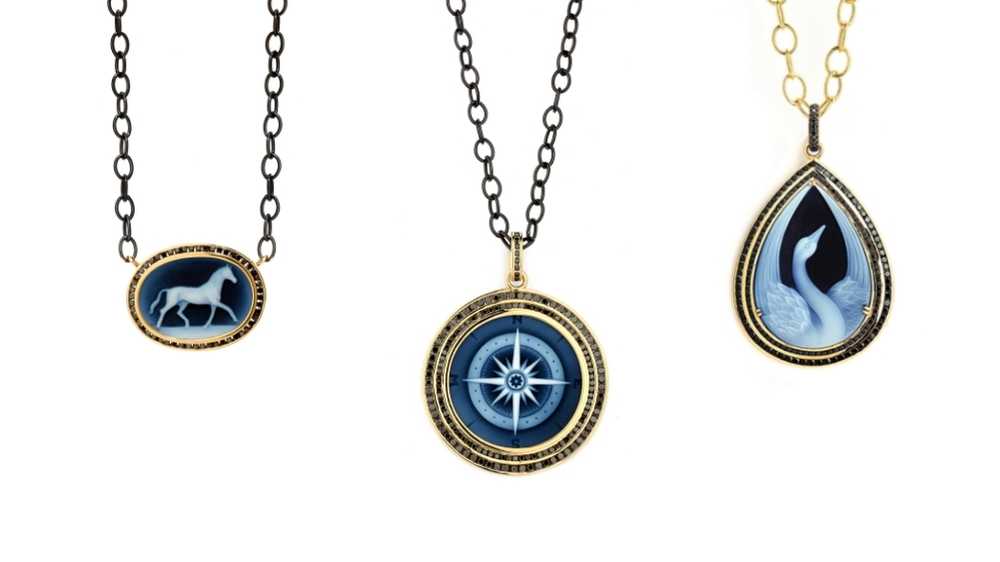
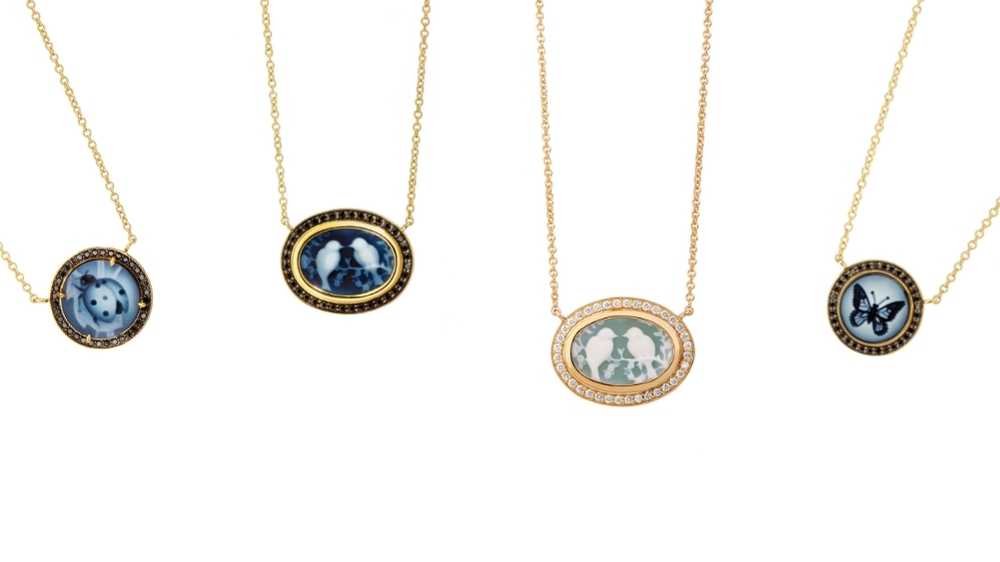
Many classic cameos, whether from Rome, Europe, England, or India, tend to depict famous historical figures in profile. Fans of Syna know we love to depict beautiful scenes from nature. Our cameos capture these scenes in all their gorgeous complexity thanks to our laser etching techniques. Lovebirds on a blooming branch or the details of a butterfly’s wings jump out in an elegant black and blue-gray contrast. And for those with the wanderlust of the swallow, there’s a striking compass pendant in black onyx, 18-karat yellow gold, and black diamonds just for you.


SYNA CAMEO NECKALCES

Modern Sensibility

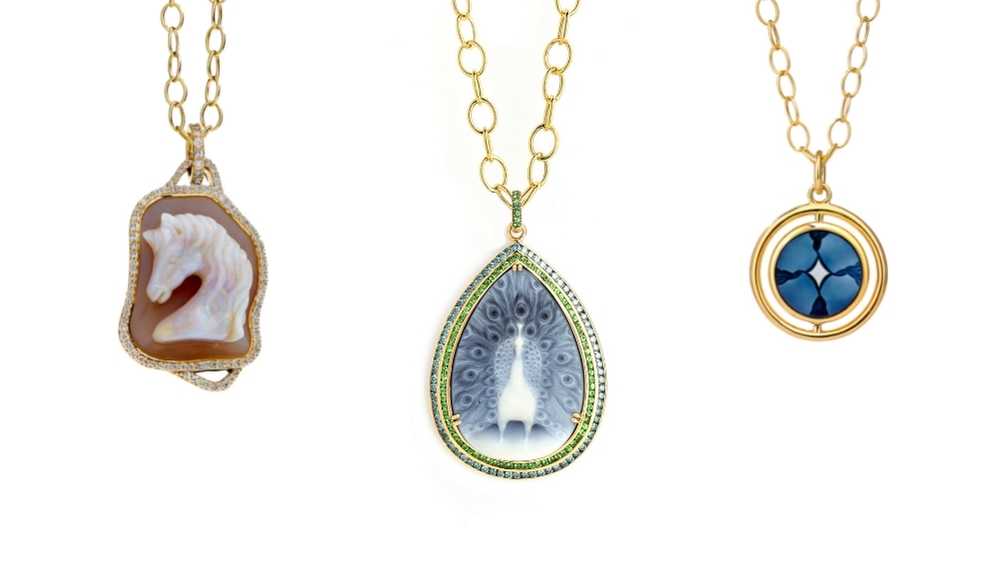
We try to inject a modern sensibility into even our more traditional cameos, like our Mogul Opal Carved Horse Pendant. The horse and its mane are rendered in great detail in sparkling Australian opal, standing out against an amber opal backing. We love the eye-catching play of color that occurs when light strikes opal. It’s the perfect medium for this kind of piece, striking a balance between classical elegance and a modern, fun vibe. Though it has a few of the familiar elements of the antique cameo, the asymmetrical border of 18k yellow gold and champagne diamonds adds a fresh take to a classic look. Framing the luminescent white horse, it’s a look we know you’ll fall in love with.


SYNA COLORFUL CAMEOS

A Soft Guide to Gemstone Hardness

  • Short Description: Hardness is defined as the ability of a gemstone to resist scratching and abrasion. Tenacity measures a material's resistance to blows. It is important to check both aspects when jewelry wearability is concerned.

Diamond is the hardest natural material in the world. However, it is also brittle. Scientifically speaking, hardness measures the ability to resist scratching, nothing more. A gemstone’s overall wearability grade takes hardness into account. However, it’s only one of several factors to consider.

What Does Gemstone Hardness Mean?

Gemstone hardness is a very misunderstood property. The word “hardness” has a very specific scientific meaning in gemology that differs considerably from its everyday usage. The scientific definition of hardness is the ability to resist scratching, nothing more. If you ask most folks, they’ll say feathers are soft and glass is hard. In the world of gemology, however, glass is fairly soft. A variety of what gemologists consider hard substances could easily scratch it.

Hardness depends on the bonds that hold the atoms together within a crystal structure. This bonding is evident in the ease with which the layers of atoms at a surface can be separated by applying pressure to a sample of another material. If the second material is harder than the first, it’ll leave a furrow or scratch. That represents the breaking of millions of atomic bonds on a microscopic scale. The hardness of a mineral is, specifically, its “scratchability.” Every mineral can be ranked based on those other minerals it can scratch.

The Mohs Scale of Hardness

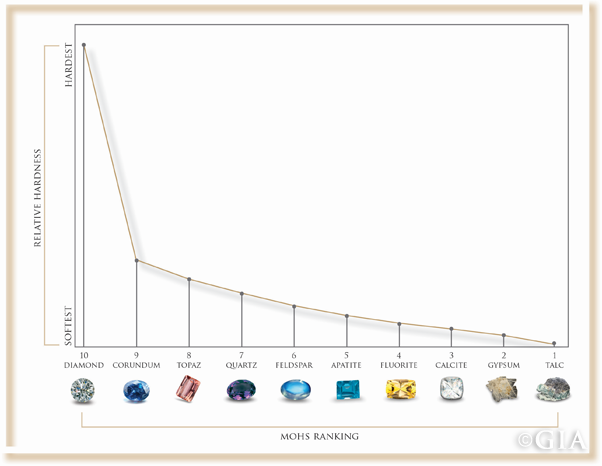
In 1812, the mineralogist Friedrich Mohs (1773-1839) established a reference scale of ten common minerals, ranked in order of increasing hardness. This scale, shown below, is called the Mohs scale of hardness.


10 Diamond
9 Corundum (rubies and sapphires)
8 Topaz
7 Quartz (Example: It scratches window glass)
6 Feldspar (Example: A steel file will scratch it)
5 Apatite
4 Fluorite (Example: A knife will scratch it)
3 Calcite (Example: A copper coin will scratch it)
2 Gypsum
1 Talc (Example: A fingernail will scratch it)


Each of these minerals can be scratched by the one above it and will scratch the ones below it. Minerals of the same hardness will not scratch each other. Thus, a ruby cannot scratch a sapphire and vice versa. A diamond is much harder than a corundum, even though they are only one division apart on the scale. 


The Mohs scale starts approximately linear, but the curve climbs sharply at the high end. Corundum (9) is twice as hard as topaz (8), and diamond (10) is four times as hard as corundum. (Note: diamonds, and only diamonds, can scratch other diamonds). 

Hardness Ranges

The hardness of a material may vary slightly with composition and also with its state of aggregation. Measuring gemstone hardness can be tricky. Often, a mark that looks like a scratch is actually a trail of powder left by the supposedly harder material. Fractional hardness scores, like 5.5, are reported when the literature has indicated an intermediate value. However, it is really not critical whether the hardness of a mineral is 5 or 5.5. A hardness range is much more meaningful.

Tenacity

Going back to the old saying, a diamond is both hard, defined scientifically, and brittle. The steel of a hammer (hardness 5 or 6) won’t scratch a diamond, but it can shatter a diamond.

Tenacity measures a material’s resistance to blows. For gemstones, these measurements are usually given as descriptive terms. As it so happens, most gemstones would be considered brittle. There are a few exceptions. Cryptocrystalline quartz, such as chalcedony, has “tough” tenacity. Jade, both jadeite and nephrite, has “very tough” tenacity.


There are a lot of misconceptions about how MOHs hardness relates to a  gemstone's toughness. This is GIA's MOHs hardness and gemstone toughness  chart. Think of MOHs hardness as a gemstone's ability


Gemstone Wearability

Assuming you don’t regularly bash your jewelry with a hammer, scratching is a hazard encountered more frequently. Think of how many times every day you put your hands inside pockets, purses, glove compartments, and desk drawers. Now think of what brushes against a ring when you do those things.

Gemstone hardness contributes greatly to the degree to which a gem will show wear. This is often referred to as wearability or sometimes “durability.” Opal with a hardness of 6 will be rapidly covered with fine scratches and lose its polish if worn every day as a ring stone. The scratches may be tiny, even microscopic, but they’ll accumulate and become visible over time. On the other hand, ruby with a hardness of 9 will remain bright and lustrous for years because it’s harder than most of the abrasive particles that contribute to wear.

Amethyst, a Birthstone for Business & Pleasure

  • Short Description: "Amethytsos" means "not drunk" in ancient Greek. Legend states that the amethyst has properties to keep you clearheaded in battle and quick witted in business affairs. No wonder we all love amethysts.

Amethystos" means "not drunk" in ancient Grek. Because of its wine-like color, early Greek legends associated amethyst with Bacchus, the god of wine. It was believed that wearing amethyst, a quartz, prevented drunkenness. Other legends reflected beliefs that amethysts kept their wearer clear-headed and quick-witted in battle and in business affairs. Fine amethysts have been set in religious jewelry and crown jewels for ages. It's no wonder that fine amethyst adorns the fingers of bishops as well as the coronation regalia of British royalty. 

COLOR

Amethyst is the purple variety of the mineral quartz. It's the gem most commonly associated with the color purple, even though there are other purple gems such as sapphire and tanzanite. The purple can be cool and bluish, or a reddish purple that's sometimes referred to as "raspberry". Amethyst also commonly shows what is called color zoning, which usually consists of angular zones of darker to a lighter color. 

CLARITY

Much of the faceted amethyst in the market is "eye clean", meaning it lacks eye-visible inclusions. Any visibly included material is usually cut into cabochons. Gem professionals overlook minor inclusions when the gem is richly colored and of otherwise high quality. Visible inclusions in light-colored gems reduce their value greatly. 

SOURCES

Russia was the major amethyst source until the 19th century when a huge amethyst deposit was found in Brazil. The once scarce purple gem was suddenly in abundance. Today, the two major sources of amethyst are in Africa and South America. African mines provide most of the fine color amethyst on the market today. 

TREATMENTS

Heat treatment is the most common technique for improving the color of natural amethyst. It can lighten the color of very dark amethyst but it cannot darken the color of pale amethyst. 

CARE & CLEANING

Amethyst can be safely cleaned with warm, soapy water. Ultrasonic cleaners are usually safe except in the rare instances where a stone is dyed or treated by fracture filling. Steam cleaning is not recommended, and amethyst should not be subjected to heat. 


Chrysoprase - The Golden Greenstone

  • Short Description: The beauty of Chrysoprase lies in its power to make creativity flow, heal relationships, and bring out one’s inner child. Wearing the vibrant gemstone fills you with peace, trust, and a sense of security.

Chrysoprase is a delightful gemstone and is considered to be the rarest and most valuable stone in the chalcedony quartz group. The term "chrysoprase" comes from the Greek words for "golden apple" or "golden leek." The stone colors vary from pastel mint green to deeper lime green, based on the amount of nickel present.

The ancient Greeks and Romans believed in the stone’s powerful metaphysical healing powers, which could also attract love, prosperity, and abundance. The calming aura of the gemstone stimulates the heart and the sacral chakras, balances positive and negative energy, and channelizes Universal energy into one’s physical body. By imparting a sense of being an innate part of the divine whole, the stone gently induces a state of deep, tranquil meditation.

The beauty of Chrysoprase lies in its power to make creativity flow, heal relationships, and bring out one’s inner child. The stone stands for hope, veracity, and authenticity. It gently aids one in overcoming impulsive, angry thoughts with a soulful surge of positivity. Wearing the vibrant gemstone fills you with peace, trust, and a sense of security.

This potent, detoxifying stone harnesses its spiritual powers to free the body and mind from the damaging shackles of toxic waste and poisons that may wreak unknown havoc within a person’s system. Chrysoprase wards off nightmares and promotes a relaxing and peaceful night’s sleep.

Syna sources its vibrant, translucent, neon-green chrysoprase stones from Queensland, Australia, and translates them into stunning, mesmerizing works of art such as necklaces, rings, and bracelets. Champagne diamonds and 18 K yellow gold only enhance the depth and charm of the brilliant green stone’s vivid and lucid color.

 Chrysoprase is an uplifting stone that supports independence while encouraging commitment. It imparts a higher consciousness, a youthful zest, and a feeling of everlasting hope.  It is the harbinger of a non-judgemental attitude and strengthens one’s belief in and acceptance of oneself and others.

Chrysoprase charm necklace


Citrine - Power for the Body & Soul

  • Short Description: Citrine is a variety of quartz, and quartz has been used in jewelry for thousands of years. The name citrine comes from the French "citron" and Latin "citrus" meaning lemon-colored. It is believed to carry healing properties of the sun, with restorative powers for the body and soul.

The name citrine comes from the French "citron" and Latin "citrus" meaning lemon-colored. Citrine is a variety of quartz, and quartz has been used in jewelry for thousands of years. Naturally colored citrine is rare, and today most citrine quartz is the result of heat treatment of amethyst quartz. Even so, gems from the Victorian era have surfaced, demonstrating that citrine was treasured even in earlier times.

cOLOR

Citrine is the transparent, pale yellow to brownish orange variety of quartz and is quite rare in nature. In the days before modern gemology, its tawny color caused it to be confused with topaz. In the contemporary market, citrine's most popular shade is an earthy deep brownish or reddish orange. The finest citrine color is a saturated yellow to reddish orange free of brownish tints.

CLARITY

Ey-visible inclusions are not common in citrine but if present they decrease its value. 

Sources

The top sources of natural citrine are Bolivia, Spain, Madagascar, Mexico, and Uruguay. Amethyst which is heat treated to a citrine color is mostly mined in Brazil. In Bolivia, amethyst and citrine colors can occur together in the same crystal. These unique gems are called ametrine.

TREATMENTS

Most citrine is the result of heating, which converts less valuable shades of purple amethyst to golden shades of citrine. The saturation of the original hue will determine the richness of the resulting citrine yellow. Citrine's attractive color, plus the durability and affordability it shares with most other quartz, make it a top-selling yellow to orange gem. 

CARE AND CLEANING

Citrine can be safely cleaned with warm, soapy water. Ultrasonic cleaners are usually safe except in the rare instances where a stone is dyed or treated by fracture filling. 

Colors of Tourmaline

  • Short Description: Believed to encourage artistic intuition with the palette to express every mood, Tourmaline comes in a wide range of colors with varying intensity and tones.

Egyptian legend has it that tourmaline gathered all the colors while traveling along the rainbow, thus giving its name, which means "a gem of the rainbow". The word tourmaline comes from the Sinhalese word "toramalli" meaning "stone with mixed colors" because it often has multiple colors in one crystal, sometimes in extraordinary patterns. Very few gems match tourmaline's dazzling range of colors which is why they were easily confused with other gems until the development of modern mineralogy. 

COLOR

Tourmaline's wide range of colors vary in intensity and tone. Many tourmaline color varieties have inspired their own trade names. The most expensive tourmalines are the highly popular green to violet colors that are often called "electric" or "neon" by the trade. These are known as "Paraiba". Pink and red colors called "rubellite:, and rich emerald green colors sometimes named "chrome tourmaline," are also very popular. The name "watermelon tourmaline" is given to a stone displaying a pink center with a green rind. Tourmaline is often found with multiple colors in one crystal, called bi-colored or parti-colored stones. 

CLARITY

Tourmalines often grow in an environment rich in liquids, and some of those liquids are often captured as inclusions during crystal growth. The most typical inclusions resemble thread-like cavities parallel to the length of the crystal. If cut as a cabochon, these may cause a cat's-eye effect. Pink to red tourmalines often has more visible inclusions than green to blue varieties. 

SOURCES

Brazil is a prolific producer of tourmaline. It is also mined in Afghanistan, Kenya, Madagascar, Mozambique, Zimbabwe, Nigeria, Pakistan, Sri Lanka, and the United States. 

treatments

Some tourmalines may be treated to improve the color. The two common treatments are healing and irradiation. Some pink to red colors can be irradiated. Blue to green colors are often heat treated, 

care and Cleaning 

 Warm, soapy water is the best method for cleaning tourmaline, The use of ultrasonic and steam cleaners is not recommended. 


Emeralds: Beauty in Imperfection

  • Short Description: We love how a clear, depthless emerald captivates the senses with its purity, the perfect embodiment of the very concept of green.

We love how a clear, depthless emerald captivates the senses with its purity, the perfect embodiment of the very concept of green. But there’s also great beauty in what some would consider imperfection, and nothing exemplifies this better than the character and individuality of a heavily included emerald.

Inclusions are materials that get trapped inside the crystal during formation. They can appear as streaks or bubbles of gas or other minerals. They’re often seen as flaws in other gemstones, but they only add to the beauty of an emerald. The unique inclusion patterns of emeralds are referred to as “jardin,” for up close they resemble the layered, complex foliage of a lush garden.

The presence or absence of jardin makes each emerald unique. As creators of hand-crafted jewelry, we strive to capture a moment of beauty in each piece. We’re inspired by the beauty of nature, and emerald jardin gives the impression of an entire forest captured in a thumbnail, the perfect complement to a nature-inspired piece of jewelry.

While the oldest emerald mines were found in Egypt, the ancient Egyptians maintained vast trade networks and traded emeralds as far as the cities of the Indus Valley, in western India. Since then, the mysterious beauty of the emerald has fascinated people across cultures and throughout history. Those ancient Egyptian mines have long since dried up, and today the most beautiful emeralds come from Colombia.

Rich Green Emerald

Emerald is the rich green form of the mineral beryl. Other varieties of beryl are aquamarine (blue-green), heliodor (golden), goshenite (clear), and morganite (pink). Emerald stands apart from these other beryl gemstones for its deep, intriguing color. It’s not the only green variety of beryl, as there is also a form of beryl that is simply known as green beryl. While green beryl has its own lively beauty, it pales in comparison to the richness of emerald’s green, which is why we say the emerald seems to be the solid embodiment of the color green itself.

It seems that the first people to admire an emerald likely agreed. The English word “emerald” comes from the Greek word σμάραγδος (smaragdos), which itself is derived from the Sanskrit word मरकत (marakata), which means “green.” Is there a better name for emerald than simply “green”?

Aside from their captivating beauty, emeralds have deep spiritual significance, as well. It is one of the Navaratna gems, the nine precious stones in the dharmic traditions of India (Buddhism, Hinduism, and Jainism).

Emeralds regulate the planet, Mercury, granting the wearer mental control, enhancing memory and communication skills. Its distinctive shade of green also made it an important gemstone in Islam, as green is associated with paradise. When gazing into an emerald and feeling at peace in its presence, it is easy to see why.

Garnet, the Calming January Birthstone

  • Short Description: The name garnet comes from the medieval Latin "granatus", meaning pomegranate, in reference to the similarity in color. Thousands of years ago, red garnet necklaces adorned the necks of Egypt's pharaohs and were entombed with their mummies as prized possessions for the afterlife.

The name garnet comes from the medieval Latin "granatus", meaning pomegranate, in reference to the similarity in color. Thousands of years ago, red garnet necklaces adorned the necks of Egypt's pharaohs and were entombed with their mummies as prized possessions for the afterlife. In ancient Rome, signet rings with carved garnets were used as seals to stamp the wax that secured important documents. Centuries later, during Roman scholar Pliny's time (23 to 79 CE), red garnets were among the most widely traded gems. In the Middle Ages (about 475 to 1450 CE), red garnet was favored by clergy and nobility. 

COLOR

Garnets are a set of closely related minerals that form a group, resulting in gemstones in almost every color. Pyrope, almandine, and rhodolite range in color from purple to red. Spessartine is found in a variety of oranges and yellows, while andradite is mostly yellow to green. Grossular has perhaps the widest color range of any garnet species, from colorless through yellow to reddish-orange and orangy red, to a strong vibrant green called tsavorite. 

CLARITY

Typical garnet clarity depends on the garnet type. For example, the red garnets almandine, pyrope, and rhodolite. typically do not have eye-visible inclusions. Some of the orange garnets like spessartine and hessonite, often have eye-visible inclusions. Because inclusions affect its clarity, hessonite is not often used in jewelry. 

SOURCES

With many different garnet species, the sources for this gem vary. Most tsavorite garnet comes from the East African countries of Tanzania, Kenya, and Madagascar. Russia is recognized as the source of high-quality demantoid garnet. 

TREATMENTS

Garnet is rarely treated. 

CARE AND CLEANING 

Warm, soapy water is always safe for cleaning garnets. Ultrasonic cleaners are usually safe except for stones that have fractures. Steam cleaning is not recommended. 


Is My Diamond Fake? Eleven Tests You Can Try at Home

  • Short Description: Has this ever happened to you? You’ve come into a piece of diamond jewelry, but you’re not exactly sure if it is indeed a diamond. Maybe you inherited a family heirloom, or you purchased a diamond for a suspiciously low price, or someone gave you a gift. You start to wonder what it’s really worth. Is this the real thing? Is there any way to truly know?
  • Long Description: Has this ever happened to you? You’ve come into a piece of diamond jewelry, but you’re not exactly sure if it is indeed a diamond. Maybe you inherited a family heirloom, or you purchased a diamond for a suspiciously low price, or someone gave you a gift. You start to wonder what it’s really worth. Is this the real thing? Is there any way to truly know?

Has this ever happened to you? You’ve come into a piece of diamond jewelry, but you’re not exactly sure if it is indeed a diamond. Maybe you inherited a family heirloom or purchased a diamond for a suspiciously low price, or someone gave you a gift. You start to wonder what it’s really worth. Is this the real thing? Is there any way to truly know?

First of all, what do we mean by “real”? The word “diamond” describes a mineral crystal composed of at least 99.95% carbon. A real diamond can be grown in the upper mantle, the layer of the Earth below the crust, over the course of millions of years, or in a laboratory over a few weeks, either by a process called High Pressure, High Temperature (HPHT), which mimics the hot, pressurized environment in which natural diamonds grow, or Chemical Vapor Deposition (CVD), a process by which carbon atoms are added layer by layer to a diamond seed inside of a vapor-filled chamber.

The following methods will tell you whether or not your stone is a diamond, but many of them won’t tell you if that diamond came out of the ground or out of a laboratory. That’s a much more difficult distinction to make, requiring an expert gemologist to use technology that is not commercially available. But if you want to determine whether your diamond is a diamond and not glass or some diamond imitation like cubic zirconia or moissanite, here are a few simple tests you can try at home.

The Electronic Test

The simplest and most accurate way to determine the authenticity of your diamond is to purchase an electronic diamond tester. You can buy these on Amazon, and they are relatively inexpensive. These devices heat the diamond and measure the rate of thermal conductivity to determine whether or not the stone is a diamond.

Newspaper “Read-Through” Test

Place your diamond on a newspaper. If you can read the writing through the diamond then it is likely that your “diamond” is actually quartz or glass. This is because diamonds are not actually transparent: they have a high refractive index and dispersion of light, which means they bend and reflect incoming light, making it difficult to see through them. These properties make diamonds appear brighter and more colorful than plain glass.

The Fog Test

A diamond is very good at dispersing heat. The “Fog Test” involves holding the diamond up to your mouth and exhaling, like you would when cleaning your glasses or a mirror. A real diamond will evaporate the fog immediately. If the fog stays on the diamond for more than 3-4 seconds, you may be holding a fake diamond.

The Weight Test

Use a carat or gram scale to weigh your diamond. Fake diamonds will normally be 50-60% heavier than authentic diamonds of the same size.

The Rainbow Test

Look closely at your diamond’s sparkle. Do you see beautiful shifting shades of gray, or do you see many rainbow reflections? If you see many rainbow reflections, you either have a fake or a low-quality diamond.

The UV Test

This is a good test for people who have access to ultraviolet light or black light. Place the diamond under the UV or blacklight in a dark room. If the diamond is real, it should have a blue fluorescent glow. If you see a green, yellow, or gray fluorescence, the diamond could be fake. If the diamond does not exhibit any fluorescence (it does not glow any color under UV light), that does not mean the diamond is fake. You may simply have a higher-quality diamond.

The Flaw Test

Diamonds tend to have tiny flaws in them such as small cracks, traces of carbon or other elements, or pinpoints. These flaws are called inclusions, and too many of them can affect the clarity of the diamond. The fewer inclusions in the diamond, the higher it scores on the clarity chart. You can use a magnifying glass to check for these tiny imperfections. If you can’t see any, you either have a lab-grown diamond, a fake diamond, or an extremely rare flawless diamond.

The Metal Test

If your diamond is set in a ring, check the shank for a hallmark. The shank is the part of the ring that encircles the finger, while the hallmark is a stamp that may contain information about the manufacturer, the type of metal used, and the composition (i.e. “925” for sterling silver or “999” for 24 karat gold), the place of manufacture, or the type of stone used. If the hallmark reads “CZ,” your stone is cubic zirconia and not a diamond. 

The Water Test

Diamonds are denser than water. If you have a loose diamond, you can drop it into a glass of water. If it sinks, then it is a real diamond. If it floats above or just below the surface of the water, your diamond is likely a fake.

The Loupe Test

Another inexpensive jeweler’s tool that you can purchase and use is a loupe, those little lenses jewelers hold up to their eyes to inspect jewels. A loupe will let you clearly see a diamond’s inclusions. Glass imitations, lab-grown diamonds, or gemstones that imitate diamonds like cubic zirconia do not generally have inclusions.

The Jeweler Test

While none of the above tests are 100% definitive on their own, performing a few of them can allow you to say with some certainty that your stone is or is not a diamond. The only place to get a definitive answer is from a professional at your local jeweler. Gemologists have the training, experience, and equipment to tell you exactly what your stone is made of. Not only will they be able to tell you if your stone is a diamond or an imitation stone; they will be able to tell you if your real diamond came from a mine or a laboratory.


Jewelry Care Made Easy

  • Short Description: Our fine jewelry is designed to stand the test of time, and with a little care each piece can be treasured by you and your family for generations to come. While it may seem like a chore, it actually doesn’t take a lot of work to keep your jewels sparkling. Read on for tips for caring for gold, enamel, and all sorts of gemstones.

Our fine jewelry is designed to stand the test of time, and with a little care, each piece can be treasured by you and your family for generations to come. While it may seem like a chore, it actually doesn’t take a lot of work to keep your jewels sparkling. Read on for tips for caring for gold, enamel, and all sorts of gemstones.

General Tips

  • Most types of jewelry will become dull over time through repeated exposure to sweat, oils, lotions, and perfumes. Make sure to apply any perfume or hair spray before putting on your jewelry. Likewise, remove your jewelry before bathing, swimming, or exercising.
  • It is possible to clean your jewelry too much. For pieces you don’t wear every day, an annual cleaning should suffice.
  • All of our pieces come with a jewelry pouch. To ensure the longevity of your jewels, store them in the provided pouch.
  • Have your jewelry professionally cleaned by a local jeweler about once a year

Gold

Pure gold does not tarnish, and gold jewelry is naturally resistant to tarnishing. Gold can, however, lose its luster over time, so make sure to wipe down your gold with a polishing cloth 3-4 times per year. You don’t want to over-polish your gold.

There are many products and devices on the market for cleaning gold, but all you need is a few drops of dish soap and a bowl of warm water.

  1. Add about a tablespoon of dish soap to a bowl of warm water
  2. Soak your gold jewelry for 10-15 minutes
  3. Use a soft-bristle baby toothbrush to remove dirt from the gold (but not the gemstone), if needed
  4. Rinse off any soap residue
  5. Pat dry with paper towels

And that’s all there is to it! If the gold jewelry contains gemstones, you’ll have to be a bit more careful. It’s fine to use soap to clean diamonds, rubies, and sapphires, but emeralds and opaque gemstones are too porous to submerge in water. In that case, it is best to use a damp cloth to wipe down the jewelry rather than soaking it in water. Finally, do not use a toothbrush, even a soft one, on gemstones.

Crystalline Gemstones

Gemstones such as quartz, amethyst, topaz, diamonds, and rubies can become dull over time due to the accumulation of oils, lotion, perfume, and the like.

Emeralds are one exception. Due to their porosity, they should not be submerged in water for any length of time.

To clean gold jewelry with crystalline gemstones, follow the steps in the above section.

Opaque Gemstones

Like emeralds, opaque gemstones are porous and should not be submerged in water. This category includes softer gemstones such as opal, turquoise, and lapis lazuli.

The best way to clean these types of gemstones is to wipe them with a damp cloth. Do not soak them or clean them with chemicals such as bleach or ammonia.

Pearls

While most gemstones can be damaged by contact with body oils, the same does not hold true for pearls. The body’s natural oils help to preserve pearls. You do, however, want to keep them away from perfumes and lotions, and remove them before exercise just like other gemstones, as perspiration can damage them.

Pearls also thrive in damp environments, so store your pearls in a humid place. A dry environment can cause pearls to crack.

Gently wipe down your pearls with a soft cloth after wearing them. Never use a toothbrush, even a soft one. Pearls are themselves very soft (2.5 on the Mohs hardness scale) and are easily scratched. For more thorough cleaning, follow these steps:

  • Add ½ tablespoon of dish soap to 2 cups of warm water
  • Dip a soft cloth in the water and gently wipe down the pearls
  • Dry thoroughly with a separate cloth.

It is worth it to buy a soft chamois or bamboo cloth to avoid scratching your pearls.

Black Rhodium

Black rhodium is a rare type of platinum often plated over silver or gold to create a darker hue. Any type of metal plating fades over time, especially in areas that come in contact with the skin, so remove your jewelry before going to bed. Avoid over-polishing plated metals.

Enamel

Enamel is made by fusing powdered glass with metal at high temperatures, creating a beautiful yet fragile work of art unlike anything else. Because of its delicacy, clean it only with mild soap and water using a soft cloth. Let it air dry, and store it in the provided Syna jewelry pouch. Avoid extreme temperatures, cosmetics, lotions, acetone, or jewelry cleaner.

For most jewelry, infrequent cleanings using soap and water is sufficient to keep it looking like it did the day you bought it. A little care at home, along with annual professional cleaning, is all it takes. For more jewelry care tips, see our care guide here.

March Aquamarine, the Happy Gemstone

  • Short Description: Aquamarine is thought to enhance the happiness of marriages. It has been said that the mineral beryl gives the wearer protection against foes in battle or litigation.

The name "aquamarine" is derived from two Latin words: aqua, meaning "water", and marina, meaning "of the sea". It has been said that the mineral beryl gives the wearer protection against foes in battle or litigation. It makes the wearer unconquerable and amiable and also quickens the intellect. Today, the gemstone's hardness, transparency, and availability of large stones make it popular with designers, artists, and carvers.

COLOR

Aquamarine is the light green-blue to blue variety of the mineral beryl. It is generally light to medium in tone. Aquamarine's most valuable color is a vibrant, medium blue to slightly greenish blue.

CLARITY

Aquamarine may occur as large well-formed crystals that are relatively clean, making them particularly valuable to collectors of mineral specimens. Some crystals might contain liquid inclusions, but clarity characteristics are few or absent in most finished gems. 

SOURCES

Brazil has been the main source of gem-quality aquamarine since 1811. Most aquamarine mines are located in northeast Minas Gerais, Brazil. The largest aquamarine found in that region was discovered in 1910 and it weighed 244 lbs. Another significant producer of aquamarine is Pakistan. 

TREATMENTS

It is standard practice to cut the rough and then heat the fashioned stones. Heat treatment of aquamarine removes the green component and leaves a purer blue color. Nearly all blue aquamarine found in jewelry results from heat treatment of bluish-green, greenish-yellow, or even brownish-yellow beryl. 

CARE AND CLEANING

Cleaning by ultrasonic and steam cleaners is usually safe unless the stone has liquid inclusions or fractures. Rarely, aquamarine might be fracture filled. These stones should only be cleaned with warm, soapy water. 


Mystical Navratna Gems

  • Short Description: According to Vedic astrology, all living beings are influenced by the nine heavenly bodies or celestial deities, and each has a gem associated with it and can regulate its associated celestial body’s cosmic rays.

Since time immemorial, jewelry has been a statement of self and an expression of belief, personality, and identity. For many, the precious stones and metals used in jewelry are believed to have talismanic and mystical benefits, granting balance, spiritual guidance, and strength. Our Navratna Mogul Bead Necklace is one such piece. This exceptionally crafted piece will transform any outfit into a stunning statement. Its beauty lies in the way that the nine distinct gems integrate into a cohesive, balanced, and powerful package.

According to Vedic astrology, all living beings are influenced by the nine heavenly bodies or celestial deities—the Navagrahas—each one corresponding to one of the planets visible to the naked eye, the sun, and the moon. Each of these nine “grahas” has a gem associated with it and can regulate its associated celestial body’s cosmic rays. A precise arrangement of these gems produces a cosmic balance and wards off negative karmic energies.

navratna3


In the Navratna Mogul Bead Necklace, you’ll find a heavenly arrangement of ruby, pearl, red coral, emerald, yellow sapphire, diamond, blue sapphire, garnet, and cat’s eye, with each carefully selected gem carrying its own celestial significance.

Associated with the fire of the sun,Ruby forms the central element of the Navratna. This sparkling red gemstone improves leadership and independence and grants unwavering focus while protecting the wearer from negative energy and psychic attacks.

Flawless, unblemishedPearlrepresents the moon and revitalizes mental health and stability. Its feminine energy encourages purity, contentment, and faith.

Red Coralis connected with energetic Mars and enlivens the person wearing it. The richness and depth of its color will have you feeling perceptive, courageous, and vital, empowered to achieve all of your goals.

Mercury is considered the planet of intellect and communication, and its benefits are regulated by the pristineEmerald. This gem stimulates mental control and memory and enhances eloquence.

Yellow Sapphireis governed by Jupiter, which embodies the qualities of wisdom, compassion, and enthusiasm. This intriguing gem will bring you closer to joy and good fortune.

Diamondbrings luxury, pleasure, and wealth into your life, a fitting representative of opulent Venus.

Blue Sapphire, when worn in conjunction with the other stones, balances the adverse effects associated with Saturn. The delicate and dreamy gem helps you gain humility, maturity, and tolerance.

The final two gems regulate the effects of the ascending and descending lunar nodes. The lunar node is the point at which the moon crosses the plane of Earth’s orbit around the sun.Garnetneutralizes the negative energy of Rahu, the ascending lunar node, bringing an invigorating wave of relief from depression and anxiety. The alluringCat’s Eyebrings out the positive effects of Ketu, the descending lunar node, providing you with clarity, encouraging spiritual awakening, and sharpening your intuition.

The Navratnas orbit with an enthralling beauty, rich with meaning and cosmic potency. Accentuate your charm and embrace the divine powers by bringing together these magnificent gemstones. This Mogul masterpiece will resonate with your soul and is sure to be revered for centuries to come, just as it has been throughout history.


Opalicious October

  • Short Description: Writers have compared opal's color to volcanoes, galaxies and fireworks. Many cultures have credited opal with supernatural origins and powers. The Romans gave it a name - opalus - that was synonymous with "precious stone"

According to Arabic legend, opal was believed to contain lightning. Writers have compared opal's color to volcanoes, galaxies, and fireworks. Admirers gave extraordinary opals poetic names like Pandora. Light of the World and Empress. In ancient Rome, this gem symbolized love and hope. The Romans gave it a name - opalus- that was synonymous with "precious stone". Many cultures have credited opal with supernatural origins and powers. The ancient Greeks believed opals gave their owners the gift of prophecy and guarded them from disease. Europeans have long considered the gem a symbol of hope, purity, and truth. 

PLAY OF COLOR

Opals display a phenomenon known as play-of-color. When a stone has play-of-color, it is referred to as precious opal. The main categories of precious opal are white, black, boulder, and crystal or water. Fire Opal, also known as Mexican Opal, sometimes doesn't show play-of-color. 

CLARITY

With an opal, clarity is its degree of transparency and freedom from inclusions. An opal's clarity can range all the way from completely transparent to opaque. A cloudy or milky background color can sometimes signal a lack of stability. Opals can have fractures and surface blemishes. Matrix, or host rock, along with signs of crazing, a fine network of cracks, have an impact on opal's durability and value.

SOURCES

Fine opal comes from all over the world. The most significant sources are Australia, Mexico, and Ethiopia

TREATMENTS

Opals can be treated by impregnation with oil, wax, or plastic. Opal doublets or triplets are thin slices of opal glued to a base material and covered with a thin dome of clear quartz. These gems are more resistant to scratching but are considered less valuable. Some opal can be dyed. 

CARE & CLEANING

The only safe way to clean opal is with warm, soapy water. Opals are sensitive to heat or excessive dryness which can lead to crazing or internal cracks.  


Pearls: How Are They Formed?

  • Short Description: Pearls are spherical, lustrous structures grown inside oysters and valued as jewels. Designing our jewelry pieces with hints of pearl has always been something we love.

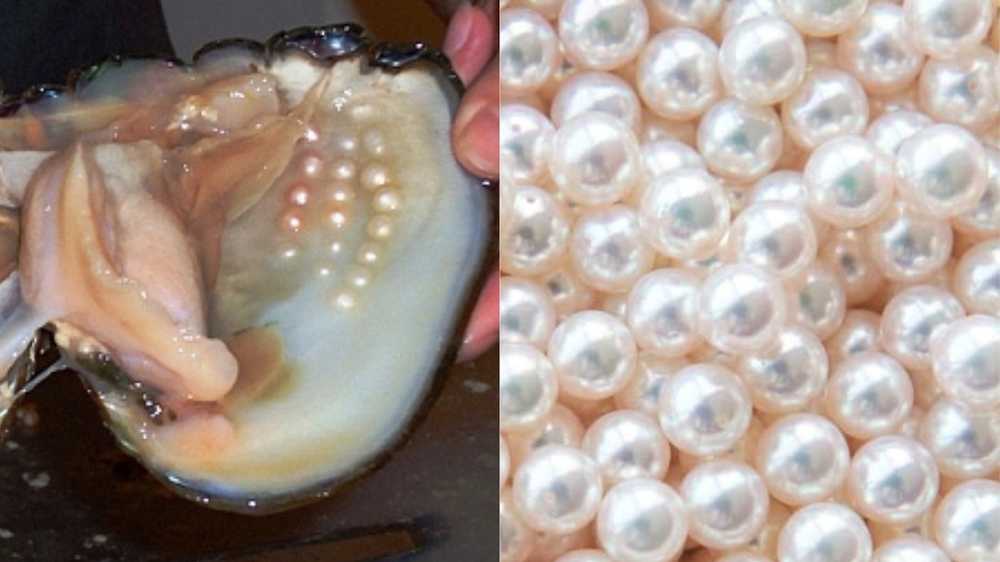
A natural pearl usually begins with a grain of sand or a small foreign object that becomes accidentally lodged within the oyster. As this object is an irritant, the oyster takes action and secretes a substance to cover it and smooth its edges: in essence, making it less irritating. This substance is called nacre and it is what gives a pearl its beautiful sheen and luster. The longer a pearl stays within the oyster, the greater the secretion of nacre and so the better the shine and depth on the surface of a pearl. 


OYSTER TO PEARL


Natural pearls occur by accident, and they are usually found in the same way- someone opens an oyster and there is a pearl inside. Because of the random nature of these occurrences, the pearls stay inside the oyster for an indeterminate amount of time. What this means is that matched sets of large natural pearls require more than a pearl necklace, while breathtaking, often has a matching price tag. 

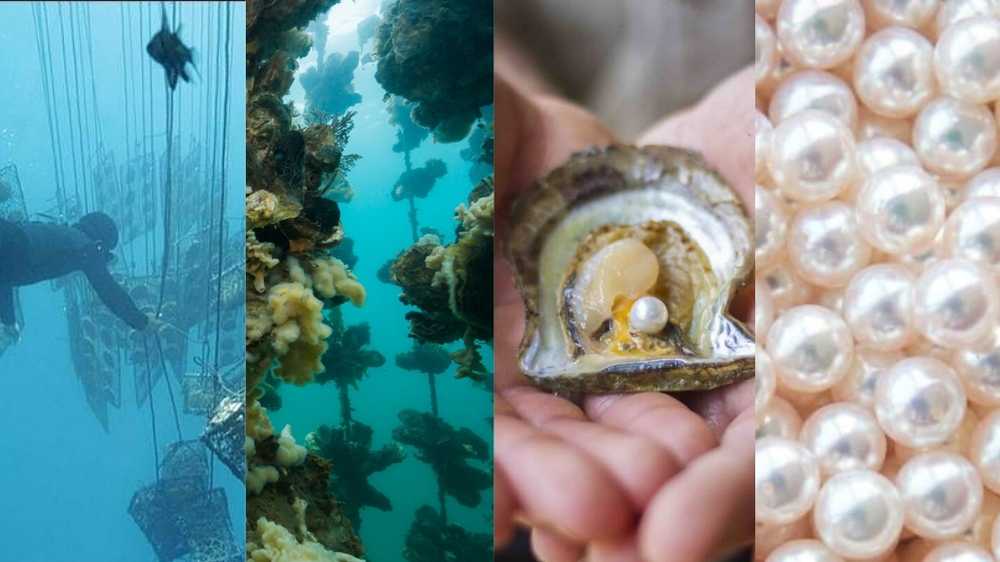
Like a natural pearl, a cultured pearl is created through an oyster's reaction to an irritant, usually, a small polished shell bead that is purposefully placed there by a human hand along with a small piece of tissue to aid in the growth of the newly forming pearl. These implanted oysters are typically grown in crops and tend in groups suspended from rafts. Usually, after at least two years, the oysters are brought ashore and opened up, hopefully, revealing a fabulous pearl in each oyster. Because the oyster's production of cultured pearls is controlled by humans, these pearls are often less expensive than natural pearls. However, qualities and prices vary greatly. 

Both natural and cultured pearls are formed within oysters. the difference is that the cultured ones have had human help to begin the culturing process. The natural ones had help from nature. Both natural and cultured pearls are genuine pearls. 


VARIETIES OF CULTURED PEARLS

There are four broad types of cultured pearls. 

AKOYA 

Akoya cultured pearls are spherical and regular in shape and come from the salt waters of Japan and China. they come in a variety of colors: white (often with a touch of silver), rose (very popular in the United States), cream, gold, blue, and grey.

FRESHWATER

Freshwater cultured pearls are formed within mussels instead of oysters, although the process is similar. They are farmed in freshwater lakes in Chain, Japan and the United States. The shapes of freshwater pearls, in the past, typically resembled crinkly rice. However, today, freshwater pearls have evolved and are available in more spherical shapes, resembling their saltwater counterparts, but usually still a bit out-of-round. They range in color from white to pastels (peaches, pinks, lavenders, pale greys) and may be dyed or natural. 

SOUTH SEA

South Sea cultured pearls are large, lovely beauties that are grown in slender oysters as big as dinner plates. These oysters produce large pearls, 10mm and up, and are found in the South Seas and around the coast of Australia. In color, the pearls can range from silver-white to a lovely golden hue. These are not your everyday pearls, as they are on the upper end of the price range. 

TAHITIAN

Tahitian black cultured pearls are 10mm+ pearls grown in French Polynesia. the oysters that carry them are black-lipped, producing colors that range from black to deep shades of purple to shades of green and grays. These pearls also carry a higher price tag than your average cultured pearls. 


PEARL FARMING PROCESS


Peridot, The August Birthstone

  • Short Description: Peridot has always been associated with light. Most peridot is formed deep inside the earth and was delivered to the surface by volcanoes.

Peridot has always been associated with light. Some believed that it protected its owner from "terrors of the night", especially when it was set in gold. Others strung the gems on donkey hair and tied them around their left arms to ward off evil spirits. The word peridot comes from the Arabic "faridat", which means "gem". Most peridot is formed deep inside the earth and was delivered to the surface by volcanoes. Some also came to the Earth in meteorites. 

color

Peridot's color ranges from yellowish-green to greenish-yellow. The most favored peridot color is a richly saturated pure grass green without any hint of yellow or brown, which is only achieved i gems of 10 carats or larger. Smaller examples tend to show yellowish-green hues. Brown undertones lower the value of peridot.

clarity

The best quality peridot has no eye-visible inclusions, with perhaps a few tiny black spots - minute mineral crystals - visible under magnification. Other inclusions common in peridot are reflective, disk-shaped inclusions called "lily pads"

sources

Peridot is found as irregular nodules (rounded rocks with peridot crystals inside) in some lava flows in the United States, China, and Vietnam and, very rarely, as large crystals lining veins or pockets in certain types of solidified molten rock. Sources for the latter include Finland, Pakistan, Myanmar, and the island of Zabargad. 

TREATMENTS

Peridot is rarely treated but might have fractures that can be filled to improve that apparent clarity. 


Red Red Ruby

  • Short Description: Referred to as the king of precious stones, ruby is the red variety of the mineral corundum. The name comes from the Latin "ruber", meaning red. Red is the color of our most intense emotions - love and anger, passion and fury.

Referred to as the king of precious stones, ruby is the red variety of the mineral corundum. The name come from the Latin word "ruber", meaning red. Red is the color of our most intense emotions - love and anger, passion and fury. It is associated with objects of power and desire -- like fast cars and red roses. Early cultures valued rubies for their similarity to the redness of the blood that flowed through their veins and believed rubies held the power of life. Ruby retained its importance with the birth of the western world and became one of the most sought-after gems of European royalty and the upper classes. Many medieval Europeans wore rubies to guarantee health, wealth, wisdom, and success in love. 

Color

The color of ruby is caused by traces of chromium. Color is the most significant factor affecting a ruby's value. Rubies are available in rich red to dark red and orangey-red to purplish-red. The most sought-after color by collectors worldwide is a deep red sometimes with a hint of purple, called "pigeon's blood" in the trade. 

CLARITY

Inclusion-free ruby is practically nonexistent so the value varies with how visible the inclusions are. Inclusions can also impact a ruby's durability, especially if there is a surface-reaching fracture. Typical clarity characteristics include thin mineral inclusions called needles. Rutile needles, or "silk" can sometimes contribute positively to a gem's appearance.

SOURCES

The most famous ruby mines are in Myanmar (formerly known as Burma) but rubies can also be found in Vietnam, Mozambique, Madagascar, Kenya, Tajikistan, Afghanistan, and Pakistan.

TREATMENTS

Heat treatment is often used to improve the color or clarity of a ruby. Heat can also cause some fractures to "heal" in certain conditions. Lower-quality material may have surface-reaching fractures filled with glass to decrease their visibility and make the gem more transparent. 

Shades Of Jade

  • Short Description: Culturally revered for centuries around the world, Jade is recognized for its extreme toughness throughout history. Our Nephrite Jade is mIned along the coast range of North America and is world renowed for being the brightest, hardest, greenest Nephrite Jade ever found.

Nephrite has an 8,000-year-old history, with its first use in ancient China. The Chinese centered their culture on Nephrite and it was their most highly prized and revered possession. For the Chinese, Jade is the "Stone of Heaven" and bridged the gap between the divine and the earthly. History has it that an Emperor once traded five cities for a small jade carving that fit in his hand. The Chinese called this stone "Yu" which could refer to any green stone that possessed the "virtues of Yu". According to Confucious, these virtues included a compact and fine texture, extreme toughness and high hardness, and a smooth and glossy luster. Due to its interlocking fibrous structure, nephrite is the toughest gemstone known. 

COLOR

Nephrite jade is a member of a group of related minerals called amphiboles. Its colors are green, black and a creamy white that the Chinese call "mutton fat". The "mutton fat" is the most desirable type of nephrite jade and is highly sought after by collectors. The green of nephrite is sometimes referred to as a "spinach" green.

TRANSPARENCY

Nephrite is translucent to opaque. It is never transparent or even semi-transparent. The fibrous structure is the reason for nephrite's extreme toughness and also contributes to its opacity.

SOURCES

Nephrite has been mined in China for thousands of years. It is also found in Canada, Russia, and New Zealand. Canada and Russia are the largest suppliers of nephrite in the world market today. New Zealand is also an important source where the Maori refer to it as pounamu. Pounamu is considered a treasure and plays a very important role in Maori culture. Our Nephrite Jade is mined along with the coast range of North America and is world-renowned for being the brightest, hardest, greenest Nephrite Jade ever found. 

TREATMENTS

Carvings made of nephrite jade are often rubbed with wax to improve the surface luster. Other than that, nephrite is seldom treated. It is possible for it to be dyed or impregnated but this is rare. 

WHAT TO LOOK FOR

Nephrite Jade is an intriguing gemstone that comes in a variety of colors: whites, greens, browns, reds, blues, and even black. The stunning green Nephrite Jade from British Columbia. Canada ranges from lighter apple green to rich emerald green to a near black. For grading purposes the richer the color and depth of translucency the finer the jade. Clarity describes the absence of inclusions and fractures in the Jade. When buying jade, choose the jade that is most appealing. Jade is as individual as you. 

Sincerely Yours, Sapphire!

  • Short Description: Sapphire, a symbol of sincerity and faithfulness has been cherished for thousands of years for its color, durability, hardness and luster. The rich hues of blue sapphire are universally known but fancy sapphires come in many vibrant colors.

Sapphire comes from the word "sapheiros", which means "bright blue stone" in Greek, and has been cherished for thousands of years for its color, durability, hardness, and luster. Ancient Mediterranean culture honored sapphire above all other gems, and early Buddhists believed in its power for spiritual awareness. One of the world's most famous blue sapphire engagement rings is the one worn by Catherine, Duchess of Cambridge, which previously belonged to the late Diana, Princess of Wales. 

COLOR

Sapphire and ruby are both members of the mineral species corundum. Corundum is a naturally colorless material but may have different colors when impurities are present. The rich hues of blue sapphire are universally known but fancy sapphires come in many colors including pink, yellow, purple, colorless, black, green and the rare pinkish-orange sapphire referred to in the trade as Padparadscha. Nevertheless, the most preferred and most valuable sapphires are deep color saturations known in the trade as "Royal Blue" and the soft velvety blue called "Cornflower Blue"

CLARITY

Blue sapphires normally have inclusions, so the lack of visible inclusions can have a positive impact on value. However, in some cases inclusions can increase the value of a sapphire when extremely fine particulate clouds scatter the light, giving the stone a velvety appearance without affecting transparency.

sources

Kashmir has a long history of mining spectacular blue sapphires that have set records at prestigious auction houses. The velvety "Cornflower Blue" hue and minute inclusions observed in Kashmir sapphire make them the most sought after. Myanmar (formerly known as Burma) is also a highly sought-after source of blue sapphire. In the United States, the state of Montana has been a leading producer of both blue and fancy color sapphire. 

TREATMENT

High temperature treatments are used to improve color or enhance the clarity of blue sapphire. Diffusing titanium or beryllium into sapphires at high temperatures can achieve a desirable color. Treated sapphire may employ temporary treatments like oiling and dying to hide fractures along with using lead glass to fill pits and cracks for more transparency.


Sleeping Beauty: A Turquoise Lover’s Dream

  • Short Description: The best of Sleeping Beauty turquoise has been extracted, and no more of it will ever be mined. As supplies are limited, we are always on the lookout for the best Sleeping Beauty turquoise to use in our jewelry.

Near the small town of Globe, Arizona, some 70 miles east of Phoenix, there are two mountains that claim the name “Sleeping Beauty.” Sleeping Beauty Mountain lies to the southwest of the town. To the north, however, is Sleeping Beauty Peak. And it is this sleeping beauty that sleeps atop some of the most beautiful sky-blue turquoise you could ever dream to behold.

Clear Blue Hue

Its uniform, clear blue hue made it a favorite of Zuni Pueblo silversmiths, and for hundreds of years it remained one of the main sources of this kind of turquoise. Persia is the source for robin’s egg turquoise, while Nevada turquoise is famous for its reddish spiderweb matrix (the dark-colored host rock embedded in the blues and greens of the turquoise). Another mine in Arizona produces a rich blue turquoise called “Bisbee Blue.” These all have their own unique beauty, but Sleeping Beauty turquoise is the choice for those who love a clear, nearly unblemished sky blue. Sleeping Beauty turquoise that contains a visible matrix, however, has become more popular in recent years.

The mine now only produces copper, a much more profitable industrial metal. While it is much less romantic that a mine called “Sleeping Beauty” should produce such a mundane metal, it shouldn’t seem strange that the same mine that once produced turquoise now produces copper, as copper is a component of turquoise. Turquoise is made up of copper, aluminum, phosphate (a phosphorus and oxygen compound), and water, and it is the presence of copper that gives it its distinctive blue color. Trace amounts of iron will result in a more greenish turquoise.

Once the world’s largest producer of turquoise, the mine shut down in 2012, after all of the highest-quality turquoise had been mined. Since then, Sleeping Beauty turquoise has only become more valuable. The best of the bed of turquoise upon which Sleeping Beauty sleeps has been extracted, and no more of it will ever be mined. As supplies are limited, we are always on the lookout for the best Sleeping Beauty turquoise to use in our jewelry.

The Healing Power of Birthstones

  • Short Description: It has long been believed that gemstones are not only objects of beauty but also focal points for powerful energies. Gemstones have the power to heal, the power to protect, and the power to amplify certain positive characteristics and ward off negative ones. Though the list of birthstones we know today was only codified in 1912, the practice of associating a particular gemstone with a particular month is centuries old.

It has long been believed that gemstones are not only objects of beauty but also focal points for powerful energies. Gemstones have the power to heal, the power to protect, and the power to amplify certain positive characteristics and ward off negative ones. Though the list of birthstones we know today was only codified in 1912, the practice of associating a particular gemstone with a particular month is centuries old.

One of the oldest precursors to the concept of birthstones is the Navratna, the nine gemstones that correspond to the nine heavenly bodies visible to the naked eye, which are said to regulate its associated body’s cosmic rays. Though not linked with particular months, these gems are each connected to a planet, and each planet rules a different astrological house.

The earliest record of birthstones in Europe comes from the 18th century. Birthstones were probably worn well before that time, as prescribing gemstones as remedies for various physical and mental ailments was a common practice in the Middle Ages. In those days, a person would not only wear their own birthstone but all twelve birthstones in succession, wearing each one during its assigned month.

This practice has its roots in Judaism and Christianity, with the twelve gemstones in the breastplate of the high priest occupying an important place in Jewish mysticism. This concept was then translated to Christianity through the twelve apostles, each of which had an associated gemstone and month of the year.

Gemstones have a long history of use in healing and well-being, and birthstones have long been a part of that tradition in various cultures around the world. Those who wear their birthstone in a piece of jewelry will receive good fortune. Astrologers believe that the light reflected off these gemstones has a unique resonance that is absorbed by the body, providing it with healing energy and counteracting the harmful effects of your birth month’s ruling planet.

Buying yourself a piece of jewelry with your birthstone can benefit you in a number of ways, but birthstone jewelry also makes for a great gift. It connects you to the person receiving the gift in a special way and bestows all of the benefits of their birthstone upon them. Wearing the birthstones of loved ones such as your spouse, parents, or children is also a thoughtful way to show that they are always in your heart or by your side, no matter where they are.

Birthstones connect us to the attributes associated with your birth month and aid in spiritual healing. On top of that, they are each colorful and unique in their own way, making a bold and individual fashion statement.

Each birthstone has its own unique benefits associated with it. Want to know more about your birthstone? Find out here https://synajewels.com/pages/birthstone.