Complimentary Shipping & Fuss-Free Returns

Why We Only Work With Solid Gold?

  • Short Description: In order to deliver the most beautiful, durable, and valuable fine jewelry, we use only solid gold in our pieces. We never use gold plating, gold filling, or gold vermeil. But what exactly does all that mean? And why is solid gold the superior choice? Let’s look at the differences between these four types of gold jewelry.
  • Long Description: In order to deliver the most beautiful, durable, and valuable fine jewelry, we use only solid gold in our pieces. We never use gold plating, gold filling, or gold vermeil. But what exactly does all that mean? And why is solid gold the superior choice? Let’s look at the differences between these four types of gold jewelry.

In order to deliver the most beautiful, durable, and valuable fine jewelry, we use only solid gold in our pieces. We never use gold plating, gold filling, or gold vermeil. But what exactly does all that mean? And why is solid gold the superior choice? Let’s look at the differences between these four types of gold jewelry.

Gold-Plated

When jewelry is gold-plated, a thin layer of gold is added to a base metal. The base metal could be anything. It could be extremely cheap zinc, it could be copper, it could be an alloy like brass or stainless steel. Since the layer of gold is so thin, even minor scratches can expose the base metal underneath the gold plating.

Gold Vermeil

This is a type of gold plating in which the base metal is 925 sterling silver. You’re still getting a minuscule amount of gold, but if the jewelry is described as “gold vermeil” and not “gold plated,” you can at least take comfort in the fact that the base metal is silver, a precious metal, and not something cheap. Gold vermeil is also known as silver gilt or gilded silver. The term “silver gilt” is more common in British English, while “gold vermeil” is more common in the United States. And in the United States, there are laws stipulating that any product advertised as “gold vermeil” must contain sterling silver and a certain amount of gold, so any reputable jeweler will not call something “gold vermeil” unless it adheres to these regulations.

Gold-Filled

Gold filling is like gold plating in that it consists of a layer of gold on top of a base metal. The difference is that while gold-plated jewelry contains only 0.05% gold, gold must make up at least 5% of the total weight of gold-filled jewelry. So while they may look similar—a thin layer of gold on top of a base metal—gold-filled jewelry contains 100 times more gold than gold-plated jewelry! The thicker layer of gold means that gold-filled jewelry can withstand much more wear and tear than gold-plated jewelry.

The filling process is different from the plating process, as well. In gold-filled jewelry production, a gold sheet is wrapped around the base metal, heated, and rolled until the metals are bonded. This is why vintage gold-filled jewelry is often referred to as “rolled gold.”

Solid Gold

Finally, there’s solid gold jewelry. Sure, it’s more expensive, but that’s because it will last a lifetime, unlike gold-plated jewelry. It is also less likely to tarnish than many of the types of base metals used. With all types of gold-plated jewelry, the base metal can tarnish, and that corrosion will begin to affect the appearance of the gold.

This isn’t to say that gold will never tarnish. 100% pure gold does not tarnish, but even 24k gold is only 99.99% pure. So while 18k gold can tarnish, it is highly resistant to tarnishing, especially if you care for your jewels properly.

All That Glitters Is Not Gold

Though visually indistinguishable from solid gold at first glance, gold plating can be easily damaged and is not ideal for fine jewelry. Gold-filled jewelry can be a beautiful and more durable alternative, while gold vermeil guarantees that what’s under the gold is another precious metal suitable for fine jewelry. None of them, however, beat the value and durability of solid gold. No matter the gold plating technique used, the outer layer of gold can get scratched, exposing the base metal, and the base metal can also tarnish and damage the gold layer. Even exposure to water can damage the bond between the base metal and gold layer. And don’t forget that different base metals can cause allergic reactions when they come in contact with the skin. Gold may be the hardest hue to hold, according to Robert Frost, but solid gold will keep its beauty and its value for much longer.


Jewelry Care, About Us

  • Hits: 2070

Why Buy 18K Gold?

  • Short Description: If 24k gold is so valuable, why don’t we use it in our jewelry? 24k gold is so soft that a piece of pure gold can be altered into different shapes by hand. For us, 18k gold strikes the perfect balance between the high value of 24k gold and the durability of 14k gold, with a color that looks great with just about any gemstone.
  • Long Description: So if 24k gold is so valuable, why don’t we use it in our jewelry? For one thing, pure gold would be prohibitively expensive. The other reason goes back to gold’s malleability. It is a soft metal—so soft that a piece of pure gold can be worked into different shapes by hand. This is why we have the cliché of gold medal winners biting into their medals: pure gold is soft enough that if you bite it, you’ll leave tooth marks.

Previously, we’ve talked about the difference between “carat” (a unit of weight for gemstones) and “karat” (the measurement of the purity of gold). If you remember, 24-karat gold is pure gold, or as close to pure as possible. Gold jewelry advertised as “24 karat gold” is at least 99.99% pure gold. 18-karat gold, on the other hand, is made of 75% gold and 25% other metals, typically copper or silver.

You may have noticed that we use 18k gold in our jewelry. If karat is a measure of purity, wouldn’t you want the purest gold available? Shouldn’t luxury jewelry be made with only the purest gold around?

Not exactly. The answer has to do with the chemical properties of gold itself. Part of the reason gold is valuable is that it was useless for much of history. Today, of course, gold is used as a conductor in electronic devices, but you can’t forge a sturdy shovel or sharp knife with gold. It’s just too soft for that purpose. But for all its uselessness in toolmaking, it is rare and pretty, so we started making pretty things out of it, things that had spiritual or social significance.

We also found a use for it as a measure of value, as in the case of gold bars and coins. Gold bars are always 24k gold. Gold coins, however, especially those minted by governments as currency, are often 22k gold (91.7% gold), which gives you a high level of purity associated with high value as well as a little added durability. You don’t want those coins getting bent out of shape or worn out.

Is 18 Karat Gold Better for Jewelry?


So if 24k gold is so valuable, why don’t we use it in our jewelry? For one thing, pure gold would be prohibitively expensive. The other reason goes back to gold’s malleability. It is a soft metal—so soft that a piece of pure gold can be worked into different shapes by hand. This is why we have the cliché of gold medal winners biting into their medals: pure gold is soft enough that if you bite it, you’ll leave tooth marks. (Unfortunately for these athletes, and their dentists, Olympic gold medals are 92.5% silver and only gold-plated.)

This means that a 24k gold earring can be irreparably bent out of shape while putting it on and a 24k gold ring can be easily damaged by banging your hand into something. Because it is a soft metal, it can also be easily scratched. It is surprisingly easy to accidentally ruin a 24k gold piece of jewelry.

Furthermore, and this is a matter of personal taste, many people prefer the more muted, elegant hue of 18k gold to the bright yellow of 24k gold. For us, 18k gold strikes the perfect balance between the high value of 24k gold and the durability of 14k gold, with a color that looks great with just about any gemstone.


Reflections, Jewelry Care

  • Hits: 1854

Transforming Your Karma

  • Short Description: Karma can be both positive and negative, however, most people tend to think about karma as something only negative and seem to refer to some fixed “fate” or “destiny,” which is not what karma is about.
  • Long Description: Karma can be both positive and negative, however, most people tend to think about karma as something only negative and seem to refer to some fixed “fate” or “destiny,” which is not what karma is about. Rather than being the judgment of some external force, Nichiren Buddhism clarifies the importance of an individual's free will. If we are responsible for our personal karma, then we are also able to change it.

Sometimes life feels like a spiral. We make the same mistakes over and over and get ourselves into the same bad relationships. We can hear ourselves asking, “Why has this disastrous situation happened to me? What did I do to deserve it?” Why does it feel like we’re stuck repeating the same patterns? When we ask ourselves questions like this, the Buddhist principle of karma can help us understand what we can do to break out of the repetitive patterns that might cause ourselves and others suffering.

Positive and Negative

Originally the Sanskrit word “karma” (or “karman”) meant “action” or “act.” In time, it came to imply deeds or results. It is important to recognize that karma can be both positive and negative, and it is certainly good karma to have been born a human being. In everyday speech, however, most people tend to think about karma as something only negative, as a kind of spiritual payback or justice for misdeeds, like when a customer who was rude to the barista leaves the coffee shop to find a parking ticket on their windshield.

When this expression is misused, it can seem to refer to some fixed “fate” or “destiny,” which is not what karma is about in Nichiren Buddhism. Rather than being the judgment of some external force, Nichiren Buddhism clarifies the importance of an individual's free will. If we are responsible for creating our personal karma, then we are also able to change it. We have the ability to change aspects of our karma that cause suffering to ourselves and others and to create the best kind of karma that will spread happiness and joy.

Buddhism teaches that humans create karma through our thoughts, words, and deeds. Karma is not created by the cause and effect at work in, for instance, the movements of the Earth’s tectonic plates. There is no conscious will in such movements, so natural disasters such as earthquakes are not caused by karma but by impersonal natural events. It would be wrong to say that people suffer the effects of hurricanes, earthquakes, or wildfires because of karma.

Not Looking Backwards

So why, then, do bad things happen to us? Maybe that’s the wrong question. What we should ask is, “This has happened to me, so what am I going to do about it?” Rather than looking backwards, for the causes of the effect, we should ourselves become the cause that creates the desired effect.

Our challenge then is not to think of our karma as something that will hold us back. Rather we should use it as a springboard for a happy future. All of those bad relationships with the same type of person, all of those similar experiences at jobs that didn’t work out, those are our karmic tendencies, but they are not our nature and they are not some kind of punishment. Transform your trauma, and that transformation will give you a new appreciation of life and new paths to follow, and it will become an inspiration to others who are suffering the same way. This is how we can transform our karma into the mission for the happiness of others. We start to consider that we actually created the current situation in order to be able to show the power of Buddhism to transform it. This attitude expresses the principle known as “voluntarily assuming the appropriate karma.”

Whatever our karma, the message we are given in Nichiren Buddhism is that chanting Nam-myoho-renge-kyo is the new cause which enables us to lessen and change the karma we have created in the past. Our prayers for the happiness of ourselves and others, transforming the world around us into a place of harmony, dignity and respect, are the best cause for our future karma and our future happiness.

Reflections, Buddhism

  • Hits: 2176

It Takes Courage to Self-Realize

  • Short Description: There is often a tension in life between what you’ve learned and what you’ve been taught. What’s the difference between the two? Is it true, or just familiar?
  • Long Description: There is often a tension in life between what you’ve learned and what you’ve been taught. What’s the difference between the two? Is it true, or just familiar?

There is often a tension in life between what you’ve learned and what you’ve been taught. What’s the difference between the two? The things you’ve learned are the ideas and values you know deep down to be true. They may have been taught to you—by teachers, by family, or by experience—but they are realities that have been confirmed again and again. They are the external truths that align with your inner being. The things you have been taught, on the other hand, are the ideas you have accepted without question, or unconsciously internalized, or taken as “common sense.” These ideas are comfortable and familiar, even if they may also be harmful and false.

The tension here is between what is true and what is familiar, between the authority you have over yourself and the authority imposed on you by others. To fully realize yourself and your potential, you first must learn to be your own authority. This means we must challenge the ideas that we unthinkingly accept from family, culture, and society.

This, of course, is much more easily said than done. The problem with these conditioned ideas is that we believe that they are our own. Many of us hold beliefs that we believe we came to logically, but if we are honest with ourselves, we may see that they’re just ideas that we have absorbed and accepted without much thought. We are surrounded by our own culture and our own society at all times, so it can be difficult to even imagine thinking or acting in a different way. And when we do act in a manner that is not socially accepted, even if we’re doing what we know is right, we are made to feel like something is wrong with us. So there are all these pressures on us to not question why we act the way we act, why we value what we value, why we love what we love, and why we hate what we hate.

So how do we get ourselves out of this trap? It’s not easy. If we want to realize ourselves, we may sometimes have to isolate ourselves for a while. We need to take a moment to listen to our own inner voice, and that can be difficult when we’re surrounded by everybody else’s noise. And it is also difficult to discern your authentic inner voice from the voice of your ego, which exists to protect you from harm. Your ego tells you that you are always right and other people are always wrong. Your ego makes you believe that you can see every side of a situation even when you’re only looking at it from your own point of view. Your ego is afraid of change; it is afraid of growth. So separating your inner voice from your ego is another challenge to self-realization.

But self-realization is not just about blindly questioning everything and contradicting anything that comes from an authority figure or expert. You have to take time with each idea and weigh its validity against what your inner voice is telling you. Silence the voices of your social group, your culture, and your ego, and listen only to the truth. What is true must become more important than what is familiar or comforting.

If we learn to listen to our inner voice and become our own authority, we can realize ourselves. And only then can we truly renew and enhance ourselves and the world around us. What is really in your nature? Are you acting in line with your nature, or are you just doing what you’ve been conditioned to do? Challenge yourself. Ask yourself these questions every day, and you will soon realize your own potential.

Reflections

  • Hits: 1658

Pearls: How Are They Formed?

  • Short Description: Pearls are spherical, lustrous structures grown inside oysters and valued as jewels. Designing our jewelry pieces with hints of pearl has always been something we love.

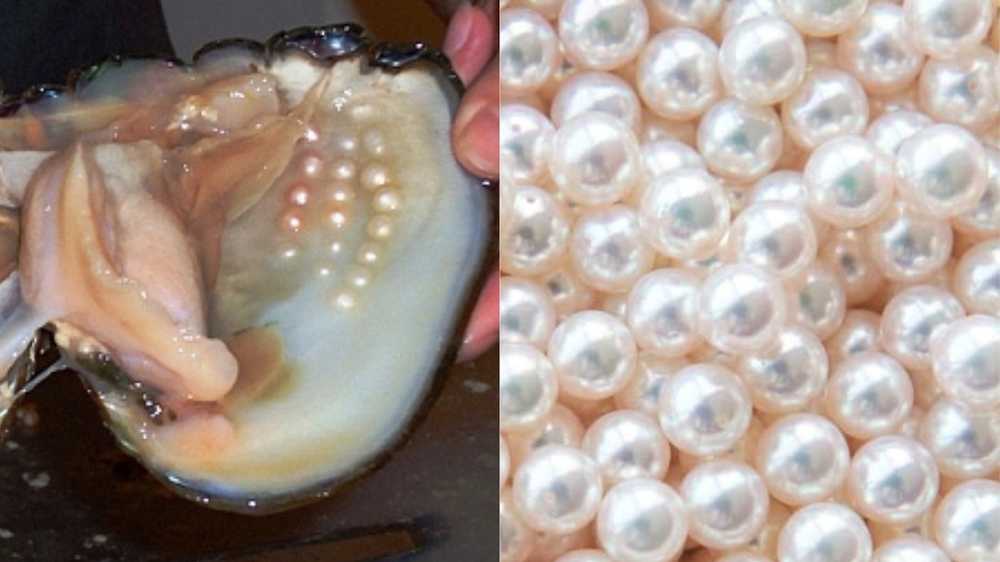
A natural pearl usually begins with a grain of sand or a small foreign object that becomes accidentally lodged within the oyster. As this object is an irritant, the oyster takes action and secretes a substance to cover it and smooth its edges: in essence, making it less irritating. This substance is called nacre and it is what gives a pearl its beautiful sheen and luster. The longer a pearl stays within the oyster, the greater the secretion of nacre and so the better the shine and depth on the surface of a pearl. 


OYSTER TO PEARL


Natural pearls occur by accident, and they are usually found in the same way- someone opens an oyster and there is a pearl inside. Because of the random nature of these occurrences, the pearls stay inside the oyster for an indeterminate amount of time. What this means is that matched sets of large natural pearls require more than a pearl necklace, while breathtaking, often has a matching price tag. 

Like a natural pearl, a cultured pearl is created through an oyster's reaction to an irritant, usually, a small polished shell bead that is purposefully placed there by a human hand along with a small piece of tissue to aid in the growth of the newly forming pearl. These implanted oysters are typically grown in crops and tend in groups suspended from rafts. Usually, after at least two years, the oysters are brought ashore and opened up, hopefully, revealing a fabulous pearl in each oyster. Because the oyster's production of cultured pearls is controlled by humans, these pearls are often less expensive than natural pearls. However, qualities and prices vary greatly. 

Both natural and cultured pearls are formed within oysters. the difference is that the cultured ones have had human help to begin the culturing process. The natural ones had help from nature. Both natural and cultured pearls are genuine pearls. 


VARIETIES OF CULTURED PEARLS

There are four broad types of cultured pearls. 

AKOYA 

Akoya cultured pearls are spherical and regular in shape and come from the salt waters of Japan and China. they come in a variety of colors: white (often with a touch of silver), rose (very popular in the United States), cream, gold, blue, and grey.

FRESHWATER

Freshwater cultured pearls are formed within mussels instead of oysters, although the process is similar. They are farmed in freshwater lakes in Chain, Japan and the United States. The shapes of freshwater pearls, in the past, typically resembled crinkly rice. However, today, freshwater pearls have evolved and are available in more spherical shapes, resembling their saltwater counterparts, but usually still a bit out-of-round. They range in color from white to pastels (peaches, pinks, lavenders, pale greys) and may be dyed or natural. 

SOUTH SEA

South Sea cultured pearls are large, lovely beauties that are grown in slender oysters as big as dinner plates. These oysters produce large pearls, 10mm and up, and are found in the South Seas and around the coast of Australia. In color, the pearls can range from silver-white to a lovely golden hue. These are not your everyday pearls, as they are on the upper end of the price range. 

TAHITIAN

Tahitian black cultured pearls are 10mm+ pearls grown in French Polynesia. the oysters that carry them are black-lipped, producing colors that range from black to deep shades of purple to shades of green and grays. These pearls also carry a higher price tag than your average cultured pearls. 


PEARL FARMING PROCESS


Gems

  • Hits: 4007